What Launched
Anthropic released Fable 5.1 and Mythos 5.1 on September 1, 2026 — the same underlying model with different safeguard levels. Fable 5.1 is generally available today on the Claude API, Amazon Bedrock, Google Cloud, Microsoft Foundry, and Claude Platform on AWS; retirement is “not sooner than September 1, 2027.” Mythos 5.1 is invite-only through Project Glasswing. Platform docs govern the exact date — the launch post itself is dated only “September 2026.”
Anthropic shares an update on alignment and security efforts ahead of the Fable 5.1 generation — including what July's evaluation incidents changed.
— @AnthropicAI August 31, 2026
What Changed vs Fable 5
Capability deltas are vendor characterization (stronger long-horizon agentic coding, multistep research, document-to-spreadsheet-to-deck work, denser-chart vision with crop-and-zoom, full-1M-context reasoning, more reliable computer use). The concrete changes:
Three breaking changes: (1) forced tool_choice (any/named-tool) now returns a 400 invalid_request_error; (2) earlier models cannot read 5.1 thinking blocks — they are one-directional, dropped blocks are unbilled, and the thinking-binding-controls-2026-08-01 header surfaces input_transformations; (3) editing earlier turns invalidates thinking blocks (Mythos 5.1 skips the conversation check; enforced for accounts created on or after August 31, 2026).
Five additive changes (mostly beta): per-message effort, turn-scoped system messages, display:"updates" progress between tool calls, the lower cache-read price, and content provenance — beta headers required, so name them in code.
Effort defaults: High in Claude Code, Medium in Cowork and Claude.ai (launch-post prose; the API default remains high). Migration is mostly drop-in — API surface, limits, per-token pricing, tokenizer, and adaptive thinking carry over — but thinking:{disabled} now 400s, and agent-loop behavior differs in the three ways above. Re-baseline cost before migrating: ZDR models need express authorization.
Benchmark Snapshot
All values Anthropic-reported with production safeguards on. Blank competitor cells mean not listed — they stay blank, not zero. Mandatory context: safeguard interventions scored zero on OSWorld (both models) and AutomationBench (Fable 5); interventions on other suites were completed by Opus-class models, which “likely reduces” the 5.1/5 scores. OSWorld uses the August 2026 task release and is not comparable to earlier published numbers.
| Benchmark | Fable 5.1 | Fable 5 | Opus 5 | GPT-5.6 Sol | Caveat |
|---|---|---|---|---|---|
| Terminal-Bench Science 0.1 | 52.6 | 24.7 | 29.0 | 22.4 | SE ±3.5–4.5; leaderboard cross-check within noise. |
| Terminal-Bench 4.0 | 55.8 | 42.0 | 52.3 | 37.3 | Mythos 5.1 at 60.9; gap reflects earlier cyber-safeguard interventions. |
| GDPval-AA v2 (Elo) | 1853 | 1723 | 1824 | 1711 | Elo scale; vendor-run. |
| OSWorld (partial / strict) | 77.9 / 41.7 | 72.9 / 36.1 | 75.4 / 39.6 | — | Aug 2026 task release — NOT comparable to earlier OSWorld numbers. |
| HLE (no tools / with tools) | 60.9 / 65.0 | 57.8 / 63.8 | 56.6 / 63.6 | — | Safeguards-on config. |
| AutomationBench | 31.4 | 17.1 | 26.9 | 19.6 | Safeguard interventions scored zero on Fable 5. |
| CursorBench 3.2.0 | 73.4 | 70.5 | 70.0 | 67.2 | Long-running agentic coding. |
Terminal-Bench Science carries ±3.5–4.5 standard error, and the public leaderboard (3 trials, Code harness) reproduces Opus at 30.0 and Fable 5 at 21.4 vs Anthropic's 29.0/24.7 — within noise. Accuracy-vs-cost charts are per-effort log-cost curves, not single-number rankings. Partner anecdotes (binders, kernels, crash recoveries) are vendor-selected, not independent reproductions.
Science Case Studies
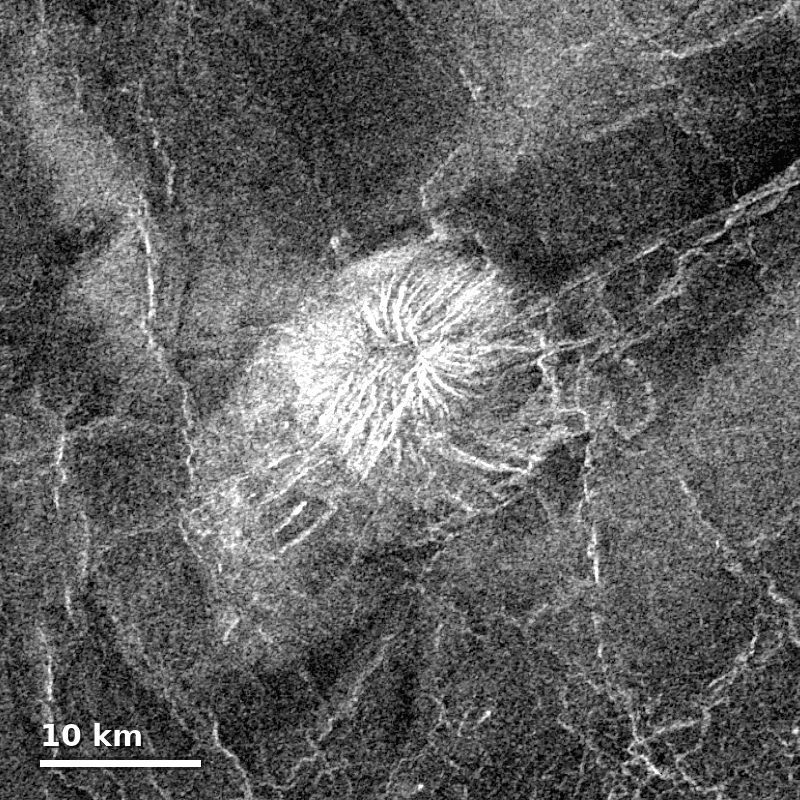
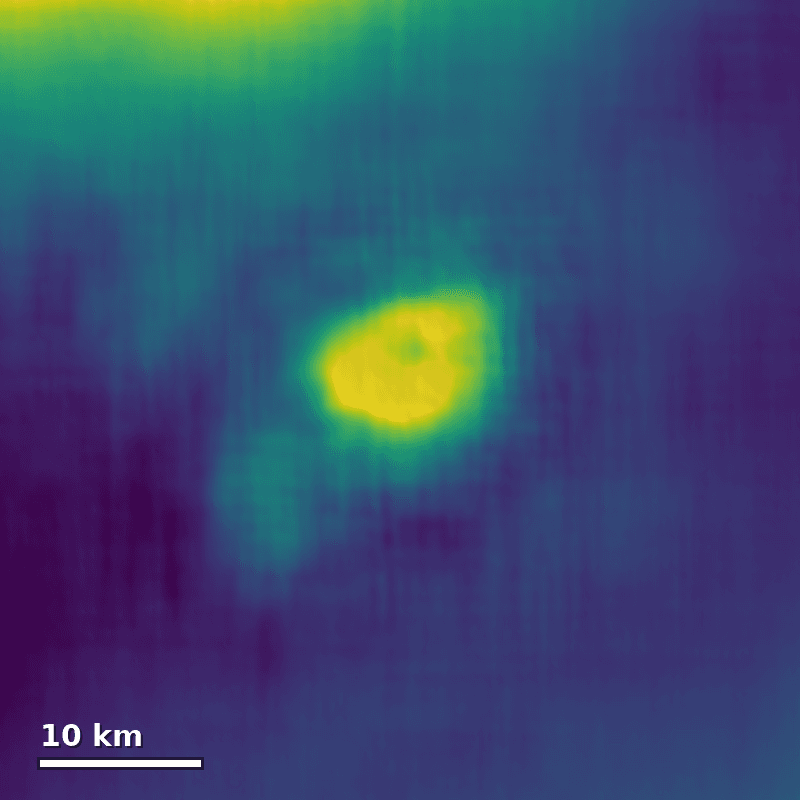
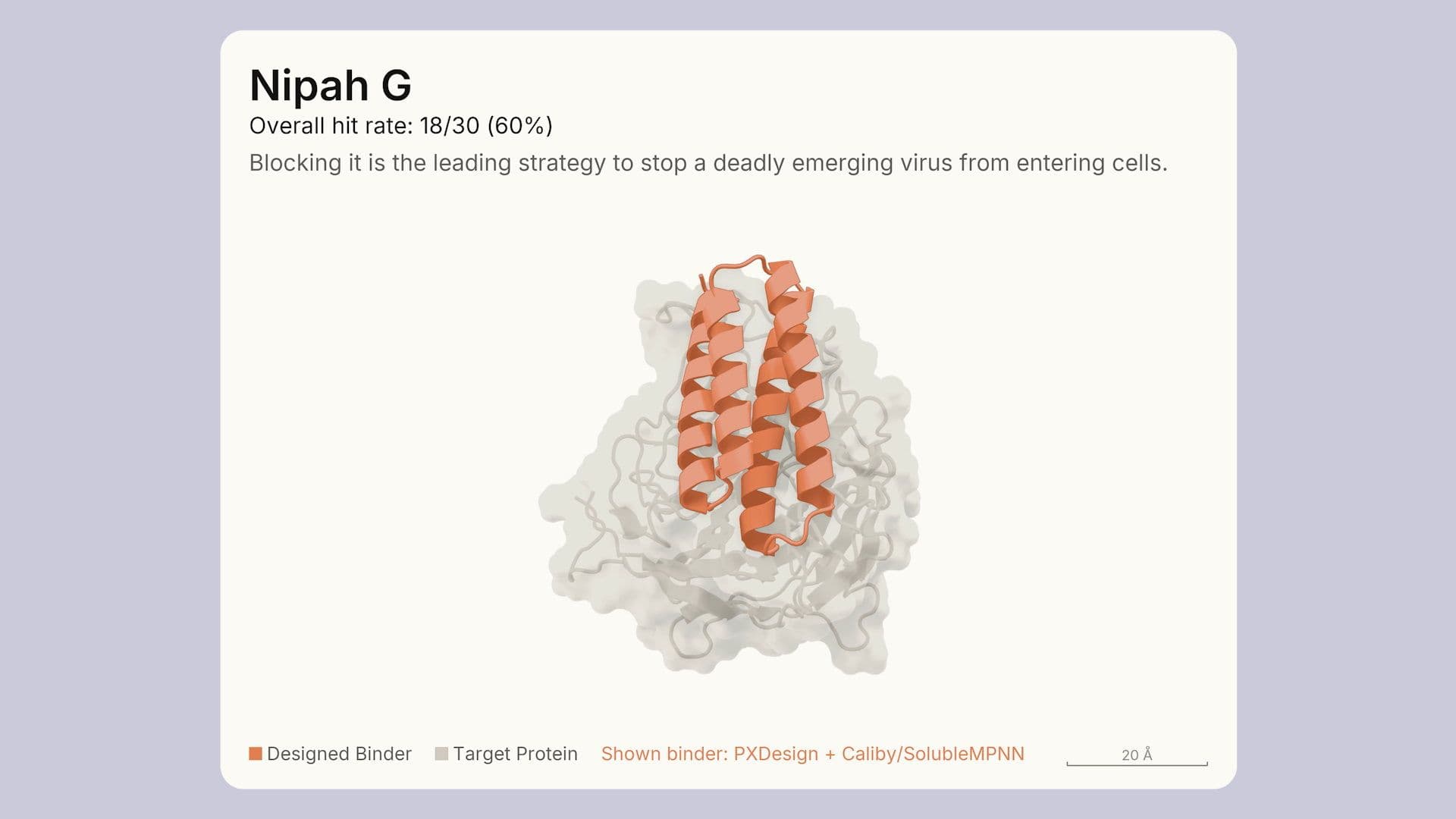
The launch evidence leans on three vendor-reported vignettes: protein binders designed for 12 targets where every design shown bound in the lab (structures are ESMFold2 predictions — with the honest footnote that the Nipah G stalk-region 1.4 nM binder is comparable to the best known, not 10× beyond); a new 300 m digital elevation model of Venus built from 30-year-old Magellan radar imagery, released under Creative Commons ahead of NASA VERITAS / ESA EnVision; and reported 2.5× kernel speedups. Treat all as Anthropic-selected demonstrations, not peer review.
Pricing and Cache Reads
Same as Fable 5 except cache reads: input $10 / output $50 per million tokens, 5-minute cache writes $12.50, 1-hour writes $20, and cache reads now $0.25 — 0.025× base input, a quarter of the Fable 5 rate (75% less). Batch is 50% off input and output ($5/$25). Anthropic estimates the change cuts typical workload costs ~25% and highly agentic workloads up to ~45% — vendor estimates from four weeks of August 2026 usage at default effort, not guarantees. Enterprise Frontier Safeguards changes nothing about model behavior, API pricing, or rate limits, and Anthropic charges nothing for it — customers pay only their own cloud storage and egress.
API Changes and Migration
The migration guide's summary: mostly drop-in, with the three breaking changes above. The 1M context (default and max), 128K sync output, always-on adaptive thinking (API default effort high), text+image input, and the post-Opus-4.7 tokenizer all carry over — note the tokenizer means the same text runs ~30% more tokens than pre-4.7 models, so never compare token counts across generations. Reliable and training cutoff: June 2026.
Mythos 5.1 Trusted Access
Mythos 5.1 (claude-mythos-5-1; Bedrock anthropic.claude-mythos-5-1) is the same model under stronger safeguards, restricted to Project Glasswing participants — access via your Anthropic, AWS, or Google Cloud account team. Two programs matter: the Cyber Vulnerability Program (currently Opus/Sonnet-class; Mythos-class access “in the near future,” not today) and the Life Sciences Access Program (US-government partnership, first participants enrolled). Claude Security for Enterprise customers runs on Mythos 5.1. Geographic limit: a set of US organizations only, as of launch. Note the docs platform list for Mythos omits Claude Platform on AWS — stated as “not listed,” not confirmed unavailable.
Safeguard Deltas and ZDR
Anthropic reports roughly 60% fewer safeguard interventions per session in Claude Code vs prior Fable 5 safeguards, and 85% fewer fires on benign elementary biology/medical requests. Fable 5.1 may discover vulnerabilities but will not develop exploits; pen-testing, exploit generation, and binary vulnerability scanning still redirect to Opus. Anti-distillation: new API accounts from launch day cannot manually edit prior context while preserving the thinking transcript (gradual rollout; existing accounts unaffected for now).
On data: the 30-day retention introduced with Fable 5 remains the default, tied to misuse evidence (“substantial evidence of attempted misuse”), and Anthropic states it has “never trained on enterprise data without explicit permission, and never will.” Enterprise Frontier Safeguards — customer-controlled cloud storage (S3, Azure Blob, GCS) with customer keys, policies, and audit — rolls out in phases starting later this fall; in the interim, eligible customers get zero-data-retention on Fable 5 and 5.1 on request. Risk posture, per Anthropic's summary of the system card: Mythos 5.1 exceeds Mythos 5 on cyber/bio capability but sits below the next RSP tier; no critical-severity jailbreak was found (including two external testers and Gray Swan); it is the most robust model to date on an external prompt-injection benchmark. All vendor-reported.
API Quickstart and the New Knobs
Same model ID everywhere it matters — claude-fable-5-1 — with two beta-gated additions worth adopting first: per-message effort and progress streaming between tool calls:
curl https://api.anthropic.com/v1/messages   -H "x-api-key: $ANTHROPIC_API_KEY"   -H "anthropic-version: 2023-06-01"   -H "anthropic-beta: mid-conversation-output-config-2026-07-01"   -H "Content-Type: application/json"   -d '{
    "model": "claude-fable-5-1",
    "max_tokens": 8192,
    "effort": "high",
    "display": "updates",
    "messages": [{"role": "user", "content": "Refactor auth.py to remove the circular import."}]
  }'
Gotchas: the beta headers are mandatory for the new parameters — without them the same call 400s. thinking:{disabled} is no longer accepted (400). And remember the tokenizer break: identical text costs ~30% more tokens than on pre-Opus-4.7 models, so re-baseline every token budget carried over from Fable 5.
The Cache-Read Math, Worked
| Workload shape | Where savings come from | Expected delta |
|---|---|---|
| Typical (Enterprise + Code + API mix) | Cache reads $1.00 → $0.25/M; rest unchanged | ~25% cheaper (Anthropic estimate) |
| Highly agentic (long context, heavy tools) | Reads dominate the bill, so the 75% read cut dominates | Up to ~45% cheaper (Anthropic estimate) |
| Cache-light (short prompts, few repeats) | Reads are a small share — nothing else changed | Near zero; migrate for capability, not price |
Run your own August-style audit before promising savings internally: pull four weeks of usage, split cache reads vs everything else, and apply the 0.025× rate. Batch stays 50% off input and output ($5/$25).
Fixing the Three Breaking Changes
Each break has a mechanical fix:
- Forced tool_choice 400s — replace
tool_choice: {"type": "any"}or named-tool forcing withauto, or handle the 400 and retry withauto.noneis unaffected. - Older models choking on 5.1 thinking blocks — strip thinking blocks before forwarding context to pre-5.1 models (dropped blocks are unbilled), or surface
input_transformationsvia thethinking-binding-controls-2026-08-01header to detect it. - Mid-conversation edits invalidating thinking — restructure loops that rewrite earlier turns (retry-with-edited-history patterns); for accounts created before August 31, 2026, check the opt-in behavior flag rather than assuming enforcement.
ZDR Now or EFS Later?
If you need zero-retention guarantees today, request interim ZDR on Fable 5/5.1 for eligible workloads — it exists now, gated by an eligibility request. If you can wait, Enterprise Frontier Safeguards (customer cloud, customer keys, no Anthropic human review required) phases in later this fall and is the durable answer. Either way, model behavior, pricing, and rate limits are identical — this is purely a data-governance decision, and Anthropic charges nothing for EFS itself.
Use It If
Use Fable 5.1 if you run long-horizon agentic coding, multistep research, or document-heavy workflows — cache reads at $0.25/M make agentic loops materially cheaper, and Terminal-Bench/GDPval gains are real even with caveats. Plan migration work if your loop uses forced tool choice, multi-model thinking-block chains, or mid-conversation edits. Skip for now if your workload is short-context and cache-light (savings shrink), or you need Mythos-class cyber/bio access today (it is Glasswing-gated and CVP Mythos access is future tense).
FAQ
Is Fable 5.1 a new model or an update?
A successor release in the same generation: docs call it the successor to Fable 5 for long-running agentic coding, knowledge work, and research. Same $10/$50 pricing and 1M context; the material change is cache-read pricing plus capability and safeguard deltas.
Will my existing integration break?
Mostly no. The three breaking changes are forced tool_choice (400 error), thinking-block readability from older models, and thinking-block invalidation on mid-conversation edits. If your loop avoids those, migration is drop-in — still re-baseline cost and behavior first.
How much cheaper is 5.1 in practice?
Cache reads drop from $1.00 to $0.25 per million tokens. Anthropic estimates ~25% total-cost reduction for typical workloads and up to ~45% for highly agentic ones — vendor estimates, so validate against your own traffic. If you barely use caching, savings are minimal.
What is the difference between Fable 5.1 and Mythos 5.1?
Same weights, different safeguard levels. Fable 5.1 is generally available; Mythos 5.1 is invite-only for vetted cyberdefenders and life scientists (currently US organizations only) via Project Glasswing.
Is my data used for training?
Anthropic states it has never trained on enterprise data without explicit permission and never will. Default API retention is 30 days; eligible customers can request zero-data-retention on Fable 5 and 5.1 in the interim, with Enterprise Frontier Safeguards (customer-controlled storage and keys) phasing in later this fall.
Sources
- Claude Platform docs — Fable 5.1 overview (IDs, pricing, specs, platforms)
- Claude Platform docs — What's new in Fable 5.1 (breaking + additive changes, cache math)
- Claude Platform docs — Fable 5.1 migration guide (drop-in scope, platform list)
- Claude Platform docs — Mythos 5.1 overview (trusted access, IDs)
- Anthropic — Introducing Claude Fable 5.1 and Claude Mythos 5.1 (benchmarks, safeguards, EFS)
- Anthropic — Enterprise Frontier Safeguards (design, rollout, interim ZDR)
Get the latest on AI, LLMs & developer tools
New MCP servers, model updates, and guides like this one — delivered weekly.