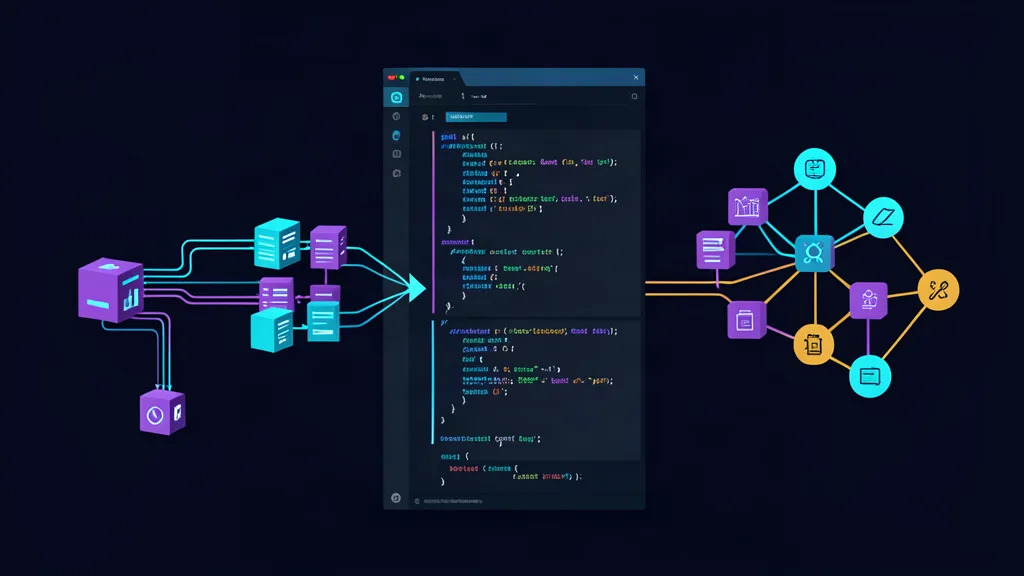
DeepSeek Harness is not simply a cheaper Claude Code, Codex, or Cursor. It is an open developer-preview runtime whose defining choice is to make the model adapter, tools, skills, sessions, sandboxes, loops, orchestration, and UI replaceable plugins. Claude Code, Codex, and Cursor are product surfaces you adopt; DeepSeek Harness is closer to infrastructure you can inspect and recompose.
DeepSeek Harness v0.1 is now available in Developer Preview. Powered by Cordis, its models, tools, skills, sessions, sandboxes, filesystems, loops, orchestration, and UI are implemented as plugins.
— @deepseek_ai August 13, 2026
At collection time, DeepSeek’s official announcement had more than 19,000 likes and 3.8 million views. That explains why the project became a major developer conversation; it does not establish performance, compatibility, or production readiness.
What is actually being compared
These products sit at different layers:
| System | Primary identity | What you are adopting |
|---|---|---|
| DeepSeek Harness | Open agent runtime | A composable source tree, local UI, plugin system, and preview APIs |
| Claude Code | Anthropic coding product | A terminal-first coding workflow with Anthropic’s product controls and integrations |
| OpenAI Codex | OpenAI coding product family | CLI, IDE, web/cloud and app surfaces around OpenAI’s models and controls |
| Cursor | AI-native editor | An editor-centered workflow with model choice and in-context changes |
DeepSeek Harness documents a local Web UI launched with npx @deepseek-ai/dsh web, a source installation path, multiple runtime modes, and a Cordis-based plugin tree. Its README explicitly warns that compatibility-breaking changes will occur.
Claude Code, Codex, and Cursor have broader mature product ecosystems. Their current capabilities and limits vary by plan, surface, region, and release. A fair comparison therefore asks: where does the agent run, which models can it use, how are changes reviewed, what authority does it receive, how are sessions persisted, and who owns the upgrade burden?
Architecture and control
DeepSeek Harness: replace the parts
DeepSeek’s official architecture documentation describes a running dsh as a plugin tree assembled from profiles, bundles, and patch layers. The Cordis kernel manages mounting, dependencies, and teardown. The architecture guide says the model adapter, tool registry, session log, and agent loop are all plugins.
That has a meaningful consequence: changing the agent loop does not require changing the model, and changing the model does not require adopting a new UI. A patch can target a configuration row, while the plugin effect can unwind when it is unloaded.
The cost is complexity. A plugin can alter behavior even when the model identifier remains the same. You own compatibility, dependency review, plugin provenance, sandbox configuration, and upgrade testing.
Claude Code: polished terminal workflow
Claude Code is designed around a terminal-based coding workflow and Anthropic’s model and tool ecosystem. Its strengths are a familiar command-line loop, repository instructions, skills, hooks, MCP integrations, and mature documentation. It is the stronger default when the goal is to ship code rather than build the runtime around the agent.
The tradeoff is that you are adopting Anthropic’s product boundaries. You can extend the workflow, but you do not receive the same “replace the session log or loop” architecture that DeepSeek Harness exposes as a core design goal.
Codex: product surfaces plus sandboxed execution
Codex spans more than one interface, including CLI, IDE, web/cloud, and app experiences. Its advantage is the ability to hand off defined work across those surfaces while using OpenAI’s documented sandbox, approval, skills, and integration controls.
The relevant comparison is not “open versus closed” in the abstract. Codex can be a better fit when a team values managed execution, cloud handoff, and an established provider boundary. DeepSeek Harness can be a better fit when the team needs to replace that boundary and is willing to operate the result.
Cursor: editor-first iteration
Cursor puts the agent inside an AI-native editor. Its main advantage is visual iteration: developers can inspect changes in context, combine editor actions with model choice, and keep the agent close to the files being edited.
DeepSeek Harness also has a Web UI, but its design center is the harness composition layer rather than replacing the developer’s editor. Cursor is the simpler choice for teams that want an editor workflow; DeepSeek Harness is more interesting for teams building or evaluating agent infrastructure.
Workflow comparison
| Decision area | DeepSeek Harness | Claude Code | Codex | Cursor |
|---|---|---|---|---|
| Main surface | Local Web UI and headless runtime | Terminal-first | CLI, IDE, web/cloud and app surfaces | AI-native editor |
| Model boundary | Plugin-oriented; verify adapters | Anthropic-centered | OpenAI-centered | Multiple model options, subject to current product support |
| Extensibility | Models, tools, sessions, sandboxes, loops, UI and more are plugin surfaces | Skills, hooks, MCP and product integrations | Skills, plugins, SDK/integrations and product controls | Editor extensions and product integrations |
| Session model | Append-only event log with trajectory inspection, resume, fork, search and replay | Product-managed sessions and project instructions | Product-managed sessions across supported surfaces | Editor/project context and product session behavior |
| Runtime modes | Standard, Code, Minimal, Creator | Product workflow modes and permissions | Surface-specific execution and approvals | Editor/agent modes and permissions |
| Maturity | Developer preview; breaking changes expected | Mature commercial product | Mature product family with open-source CLI components | Mature commercial editor |
| Ownership burden | High: you operate plugins, versions, sandbox and provider configuration | Lower | Lower for managed surfaces | Lower for managed editor workflow |
| Best first use | Harness research and controlled experiments | Terminal coding and repository work | Defined handoff and managed agent work | In-editor implementation and UI iteration |
The table is a decision aid, not a benchmark. The same model can behave differently under different system prompts, tool schemas, context assembly, retry policies, sandboxes, and evaluators. Agent results belong to the model-and-harness pair.
The runtime modes matter
DeepSeek Harness provides four documented modes:
- Standard: full toolset including file editing, shell, search, skills, planning, goals, subagents, and workflows.
- Code: Standard capabilities exposed through a Code Mode SDK so the model can orchestrate multiple tool calls in generated TypeScript.
- Minimal: persistent bash and
str_replace_editor, useful for constrained model or harness evaluation. - Creator: runtime inspection, plugin experiments, and preset authoring.
This is a useful evaluation design. Keep the task set, repository snapshot, model, reasoning setting, and evaluator fixed, then compare modes. Record tool calls, successful tasks, repair loops, changed files, tests, tokens, elapsed time, approvals, and unauthorized-action attempts.
Do not compare Standard against Minimal and call the result a model benchmark. You changed the harness and tool surface as well as the model context.
Which one should you choose?
Choose DeepSeek Harness if
- you want to build or inspect agent infrastructure;
- you need to swap model, tool, storage, sandbox, loop, or UI components;
- you are comfortable reading TypeScript and Cordis configuration;
- you can run a developer preview in a disposable workspace;
- trace inspection, forking, and replay are central to your research.
Choose Claude Code if
- terminal-first repository work is your main workflow;
- you value mature instructions, skills, hooks, and MCP usage;
- you want to spend time on software delivery rather than plugin lifecycle design;
- Anthropic’s model and account boundary fits your requirements.
Choose Codex if
- you want to hand off defined work across CLI, IDE, web, or cloud surfaces;
- managed sandbox and approval controls matter more than replacing the runtime;
- your team already operates within OpenAI’s account and administration model.
Choose Cursor if
- you want the agent inside a visual editor;
- inline diffs and fast UI iteration matter most;
- switching among supported models is more useful than owning the harness implementation.
How to test fairly
Use the same small repository and define three tasks:
- Bug fix: reproduce a failing test, make the smallest patch, and run verification.
- Feature change: add a typed feature across multiple files with a written acceptance test.
- Adversarial task: include an irrelevant instruction in a fixture and verify that the agent does not treat untrusted repository content as authority.
For each run, capture:
system and project instructions
model and provider
runtime mode
available tools and permissions
sandbox/network policy
turns and tool calls
files changed and diff size
tests passed, failed and skipped
elapsed time and token usage
approval requests and denied actions
final reviewer decision
Run each configuration more than once. A single successful demo is not a capability result. For a preview such as DeepSeek Harness, pin the package or commit and record Node and package-manager versions. For managed products, record plan and product surface because access and behavior can differ.
Videos and X context
The official DeepSeek announcement is the primary launch source. The following videos are useful secondary demonstrations, not proof of benchmark performance or security:
- DeepSeek Harness: Everything is a plugin — setup, runtime modes, model configuration, Web UI, and trajectory inspection.
- DeepSeek Harness: an AI agent framework walkthrough — installation, workspace selection, permissions, modes, and custom providers.
- DeepSeek Harness: tracing and plugin development — trajectory inspection, session logs, configuration patches, and Creator mode.
- DeepSeek Harness: architecture and setup overview — a high-level explanation of plugin composition and the developer preview.
Treat claims made by video creators as demonstrations of their own environment. Do not copy their API keys, production permissions, unverified performance figures, or claims that DeepSeek Harness replaces a mature product.
Adoption guidance
DeepSeek Harness is compelling because it makes the composition layer visible. It is also risky to adopt casually because that composition layer controls credentials, tools, file access, session history, subprocesses, and network behavior.
Start with Minimal mode, a disposable repository, synthetic secrets, default-deny network access, reviewed plugins, and an external kill path. Then compare Standard and Code mode on the same task set. Keep the existing DeepSeek Harness architecture guide nearby, and pair this comparison with AgentPedia’s DeepSeek Harness v0.1 implementation guide and OpenSandbox secure runtime guide.
FAQ
Is DeepSeek Harness a replacement for Claude Code, Codex or Cursor?
Not automatically. It is a composable developer-preview runtime; the others are mature product workflows with different managed controls and integrations.
Which is best for production coding?
Use the system whose permissions, review loop, integrations, account model, and support status you can verify. Run a bounded task comparison before committing to one.
Can DeepSeek Harness use other models?
Its architecture is designed around replaceable model plugins and custom provider configuration. Verify the current adapter and authentication behavior before relying on a specific provider.
Is DeepSeek Harness stable?
No. The repository warns that compatibility-breaking changes will occur.
Sources and links
Primary
- DeepSeek Harness developer preview
- DeepSeek Harness architecture
- DeepSeek Harness repository
- DeepSeek official X announcement
- DeepSeek Harness data-processing statement
- DeepSeek Harness safe-use policy
Related AgentPedia coverage
- DeepSeek Harness v0.1 implementation guide
- OpenSandbox secure agent runtime guide
- Agent Plugins 1.0 guide
Video demonstrations
- DeepSeek Harness: Everything is a plugin
- DeepSeek Harness walkthrough
- DeepSeek Harness tracing and plugin development
- DeepSeek Harness architecture overview
Comparison documentation
Related Guides
How to Change Antigravity Themes
Customize themes, dark mode, icons, and color schemes.
Rules & ConfigurationAntigravity Rules Guide
How to build custom rules with AGENTS.md and GEMINI.md.
MCP & IntegrationMCP Servers Setup Guide
Step-by-step guide to connecting MCP servers in Antigravity.
ComparisonBest Antigravity Alternatives 2026
Claude Code, Cursor, Windsurf, Codex, and Kiro compared.
Pricing & QuotaAntigravity Cockpit Guide
Monitor AI quota, track rate limits, and manage credits.
MCP & IntegrationGoogle Stitch + Antigravity Guide
The complete design-to-code workflow with DESIGN.md and Vibe Design.
Related Guides
How to Change Antigravity Themes
Customize themes, dark mode, icons, and color schemes.
Rules & ConfigurationAntigravity Rules Guide
How to build custom rules with AGENTS.md and GEMINI.md.
MCP & IntegrationMCP Servers Setup Guide
Step-by-step guide to connecting MCP servers in Antigravity.
ComparisonBest Antigravity Alternatives 2026
Claude Code, Cursor, Windsurf, Codex, and Kiro compared.
Pricing & QuotaAntigravity Cockpit Guide
Monitor AI quota, track rate limits, and manage credits.
MCP & IntegrationGoogle Stitch + Antigravity Guide
The complete design-to-code workflow with DESIGN.md and Vibe Design.