Get the latest on AI, LLMs & developer tools
New MCP servers, model updates, and guides like this one — delivered weekly.
An AI avatar video generator turns a script into a video of a person speaking it. You pick a stock presenter or clone yourself from a short clip, paste text or upload audio, and the tool renders a talking head with lip sync, gestures and a voice. Two years ago the output looked like a puppet. In November 2026 the gap to real footage is small enough that HeyGen says 84% of viewers could not tell which clip was real in its own launch test, and an independent arena put the same model first.
That makes the buying question practical rather than technical: which tool has the realism you need, the price you can plan around, and the workflow your team will actually use. Our answer as of November 21, 2026: HeyGen is the best overall pick on realism evidence, Synthesia and Colossyan are the safer picks for enterprise training, Creatify is the closest challenger for ads, D-ID and Tavus are the developer-first options, and AI Studios is the budget choice. This post gives you the prices, pros, cons and limits behind each call.
A third-party head-to-head of HeyGen and Synthesia from Cybernews. We list it as a starting point for the two best-known tools; check any price it quotes against the vendor pages in this post, because both vendors have changed plans since.
The Short Answer
If you only have a minute: start with HeyGen’s free plan and test your own script. If you are buying for a company that needs seats, SSO and procurement paperwork, put Synthesia and Colossyan on the shortlist and compare them on your training workflow. If you make ads, test Creatify beside HeyGen. If you need a live talking agent, look at Tavus and D-ID rather than the studio tools.
Three facts shape the rest of this guide. First, there is now one independent, blind-vote benchmark for avatars (New Measure’s Avatar Arena) and it favours HeyGen by a clear margin, but it only tests short clips. Second, almost every vendor moved to credit-based pricing, so the monthly sticker price tells you less than minutes per credit. Third, several vendors changed or scrambled their plan pages this autumn (Argil replaced its lineup, Hedra’s own pages show different plan lists), so we mark anything we could not read on a live vendor page.
Quick Picks
| Use case | Pick | Why |
|---|---|---|
| Best overall | HeyGen | Top of both Avatar Arena boards (personal 1,197 Elo, stock 1,237 Elo), 175+ languages, a free tier, and a $29 per month entry plan. |
| Best for enterprise training | Synthesia | Seats, SSO, 140+ translation languages and custom contracts. Fifth of five on the Arena stock board, so you pay for the workflow, not the realism. |
| Best for L&D and SCORM | Colossyan | Free Starter plan, SCORM exports from the $59 per month plan, interactive videos, and a full-body NEO 2 avatar model. |
| Best for ad creatives | Creatify | Second on both Avatar Arena boards, from $10 per month billed yearly, with an API starting at $99 per month. |
| Best for editing short-form | Captions (Mirage) | $24.99 per month for AI twins plus chat-based editing. Slowest and least reliable in the Arena sample. |
| Cheapest paid start | D-ID | Lite at $4.7 per month billed annually, with a visible watermark. Strongest as a developer and agent platform. |
| Best for real-time avatars | Tavus | Conversational video interface and Phoenix-4.5, free developer tier, $59 per month Starter. |
| Best for volume at a low price | AI Studios | Personal plan at $24 per month billed yearly with 3 avatar slots and lip-synced dubbing. |
| Best for character performance | Hedra | Character-3 turns an image and audio into a talking character. Pricing is inconsistent across its own pages, so check checkout. |
| Best for creator-led series | Argil | Pro from $50 per month with credit tiers; the Studio tier is a $1,250 per month done-with-you service. |
Master Comparison Table
Prices are in US dollars as read on each vendor’s pricing page on November 21, 2026. “n/c” in the later tables means we could not confirm the feature on a vendor page, which is not the same as “no”.
| Tool | Type | Paid price (as of November 21, 2026) | Free tier | Standout |
|---|---|---|---|---|
 HeyGen | Avatar studio and video agent | Creator $29, Pro $49, Business $149 per month; Enterprise custom | Yes: 3 watermarked videos per month, up to 1 minute each | Top of both Avatar Arena boards; 175+ languages |
 Synthesia | Enterprise avatar studio and video agent (Syren) | Starter $19 ($9 first month), Pro $99 monthly or $79 yearly; Enterprise custom | Yes: Basic plan, watermarked | Team workflow, 140+ translation languages, 125+ to 240+ avatars by plan |
 Colossyan | Avatar video for training | Professional $59 per month billed yearly; Enterprise custom | Yes: Starter plan, watermark, 20 minutes of NEO per month | SCORM export, interactive videos, NEO 2 full-body avatars |
 Creatify | Ad-focused avatar and UGC video | Standard $15, Pro $55, Ultra $95, Business from $195 per month ($10, $38, $66, $136 billed yearly) | No free plan listed on the pricing page | Aurora model, second on both Avatar Arena boards |
 Captions (Mirage) | Mobile-first editor with AI twins | Max $24.99, Frontier $69.99 per month (iOS plans per the pricing page) | Yes, basic editing only; AI features need a paid plan | AI twin from 10 seconds of footage, chat-based editor |
 D-ID | Avatar videos, agents and API | Lite $4.7, Pro $16, Advanced $108 per month shown with annual billing; Enterprise custom | Trial: 3 minutes, full-screen watermark | Real-time agents and a developer API on the same minute balance |
 Tavus | Real-time conversational video and developer API | Starter $59, Growth $397 per month; consumer PALs $20 per month; Enterprise custom | Yes: developer Basic plan, 25 minutes of conversational video | Phoenix-4.5 renderer, 134 ms audio to video (vendor figure) |
 AI Studios | Avatar studio (DeepBrain AI) | Personal $24 per month yearly ($29 monthly); Team $55 per seat; Enterprise custom | Yes: 3 videos of 1 minute, 720p, watermark | 2,000+ AI-generated avatars, lip-synced dubbing, interactive avatars |
 Hedra | Character and talking-video platform | Third-party reports $10 to $75 per month; not confirmed on a live plan page by us | Free credits reported by third parties; not confirmed live | Character-3 image and audio to talking character |
 Argil | Creator video platform | Pro from $50 per month (per Argil's blog); Studio $1,250; Enterprise from $2,500 | None listed | Credit tiers on one Pro plan; managed Studio tier |
The Avatar Arena Leaderboard
New Measure’s Avatar Arena is the only blind-vote comparison of avatar providers we found. A creator writes a script, two providers each render an avatar reading it, the names stay hidden, and the creator picks a winner, a tie or “both bad”. The report was published on November 18, 2026 and covers votes cast from October 27 to November 16, 2026. Scores use a Bradley-Terry model shown on an Elo scale with a category average of 1,000.
Personal avatars (AI versions of the creator)
| Rank | Provider | Elo | Note |
|---|---|---|---|
| 1 | HeyGen Avatar 6 | 1,197 | 542 votes on this board |
| 2 | Creatify Aurora 2.0 | 1,053 | Range overlaps VEED Lipsync 2.0 |
| 3 | VEED Lipsync 2.0 | 1,000 | Not in our ten |
| 4 | Captions Avatar X | 896 | Not separable from Runway |
| 5 | Runway GWM-1 Avatars | 854 | Not in our ten |
Stock avatars (ready-made presenters)
| Rank | Provider | Elo | Note |
|---|---|---|---|
| 1 | HeyGen Avatar 6 | 1,237 | Ahead by more than the uncertainty |
| 2 | Creatify Aurora 2.0 | 1,088 | Clearly ahead of the providers below |
| 3 | Tavus Phoenix-4.5 | 920 | Statistically tied with ranks 4 and 5 |
| 4 | JoggAI | 887 | Not in our ten |
| 5 | Synthesia EXPRESS-1 | 868 | Statistically tied with ranks 3 and 4 |
Read this with the limits in mind. Scripts were capped at 500 characters, the typical script was 62 words, and 97% of completed comparisons produced videos of 35 seconds or less, so the results say nothing about two-minute explainers or ten-minute lessons. The voters were people who chose to use the arena. Only eight providers were tested, so D-ID, Colossyan, AI Studios, Hedra and Argil are not on the boards at all. HeyGen published its own announcement of the result, so treat the framing in that post as vendor marketing and the underlying report as the evidence.
New Measure also reported speed. In the typical case HeyGen took about three minutes per video, Creatify a little over two, and Captions about eight. JoggAI was fastest for stock presenters at about 46 seconds and Runway for personal avatars at about one minute. About 7% of Captions videos failed to generate, against 2% or less for most others. The report notes a failure can come from its own integration as well as the provider.
Personal avatar: HeyGen Avatar 6 leads, with Creatify Aurora 2.0 (1,054) and VEED Lipsync 2.0 (997) statistically tied for second. Captions Avatar X and Runway GWM-1 Avatars round out the board.
— @New_Measure November 17, 2026
1. HeyGen
What it is. HeyGen is the most widely known avatar studio. You write or upload a script, choose from 500+ free and 700+ paid stock presenters or a custom video avatar, and render in 175+ languages on the Creator plan. Its current model is Avatar 6, announced on November 17, 2026, with a reference input of up to 30 seconds of video plus a photo. Newer additions on the pricing page include a Video Agent, HeyGen Voice and the text, image and reference to video model HeyGen Video 1.
Who it is for. Marketers, founders and creators who want the most natural-looking presenter, plus teams that need SSO, SCORM and integrations with n8n, Make, HubSpot and Zapier on the Business plan.
can you tell which one is real? 84% couldn’t. Introducing Avatar 6, #1 on New Measure’s Avatar Arena.
— @HeyGen November 17, 2026
| Pricing (as of November 21, 2026) | Free $0. Creator $29 per month (600 credits). Pro $49 per month (1,000 credits; tiers up to 100,000 credits at $4,300). Business $149 per month (1,500 credits, extra seats $20 per seat per month). Enterprise is custom. |
| Free tier or trial | 3 watermarked videos per month, up to 1 minute each, with Avatar 6, Video Agent and one custom video avatar. |
| Limits to know | Credit-based. The page lists video length up to 30 minutes on Pro and 60 minutes on Business. Credits roll over one month on monthly plans. |
| API or agent access | Yes. Developer documentation is at docs.heygen.com. |
Pros
- First on both Avatar Arena boards: 1,197 Elo for personal avatars and 1,237 for stock presenters.
- A real free plan with the current Avatar 6 model, so you can test before paying.
- 175+ languages on the entry paid plan and a very large stock library.
- Business plan covers SSO, SCORM export and common automation integrations.
Cons
- Not the cheapest: the entry paid plan is $29 per month and credits drain quickly on long video.
- Slower than most rivals in the Arena: about three minutes typical per short clip, with one in ten personal videos taking more than nine and a half minutes.
- Free plan is capped at 3 videos of one minute and watermarked.
- Per-credit costs rise when you use premium models such as Avatar 6 Pro, 4K or Cinematic Avatars.
Benefits for you
- You get the most convincing presenter in the one blind test we have, without enterprise sales calls.
- The free plan lets you judge your own face or script before spending anything.
- One tool covers avatars, translation and a video agent, so you avoid stitching three subscriptions.
Standout use case. A founder who wants a personal presenter for weekly update videos in several languages. Skip it if you only need a few cheap clips a month (D-ID and AI Studios cost less) or if procurement insists on a vendor with a larger enterprise footprint. For the open-source side of the HeyGen ecosystem, see our HeyGen HyperFrames guide.
2. Synthesia
What it is. Synthesia is the enterprise-oriented avatar studio, with 125+ avatars on Starter, 180+ on Pro and 240+ on Enterprise, translation into 140+ languages, and a newer AI video agent called Syren that writes a video as code and renders it live. Its credit system is shared across all AI features. The page puts a typical finished minute at about 100 credits and a one-minute Syren video at 1,000 to 2,000 credits.
Who it is for. Companies rolling out training, onboarding and internal communications where governance, seats and collaboration matter more than the last few points of realism. Synthesia describes itself as trusted by over 90% of the Fortune 100, which is a vendor claim we did not verify.

| Pricing (as of November 21, 2026) | Basic $0. Starter $19 per month ($9 for the first month). Pro $99 per month, or $79 per month billed yearly (the page shows seasonal offer labels next to these figures). Enterprise is custom. Extra seats are $20 per seat per month. |
| Free tier or trial | Basic plan: watermarked, Syren videos capped at 3 minutes, 500 credits of free allowance. |
| Limits to know | Monthly credits do not roll over. No pay-per-video option. Studio Express-1 avatars are a $1,000 per year add-on on annual plans only and can take up to 10 days to process. |
| API or agent access | Yes, on paid plans, documented at docs.synthesia.io. Interactive avatars API uses 10 credits per minute for the avatar only, 20 with the widget. |
Pros
- Strong team features: up to 10 team members and unlimited guests on Pro, SSO and custom contracts on Enterprise.
- 1-click translation to 140+ languages and dubbing with lip sync.
- Syren agent can turn a prompt into a finished video, including premium models such as Seedance 2.5.
- A free Basic plan for evaluation.
Cons
- Ranked fifth of five on the Arena stock board (Synthesia EXPRESS-1, 868 Elo), statistically tied with ranks three and four.
- At least nine in ten voters said HeyGen avatars moved more naturally than Synthesia, Runway and Captions avatars.
- Pro jumps to $99 per month and credits expire monthly.
- Custom studio avatars cost extra and can take days.
Benefits for you
- You get a procurement-friendly vendor with collaboration, moderation and translation built in.
- Translation and dubbing credits make one script reusable across markets.
- Seat pricing is explicit, so a department can forecast cost.
Standout use case. A global company localising compliance training. Skip it if you are a solo creator who wants the most lifelike presenter at the lowest price. The Arena sample favours HeyGen on realism, and Creatify beats Synthesia at lower cost.
3. Colossyan
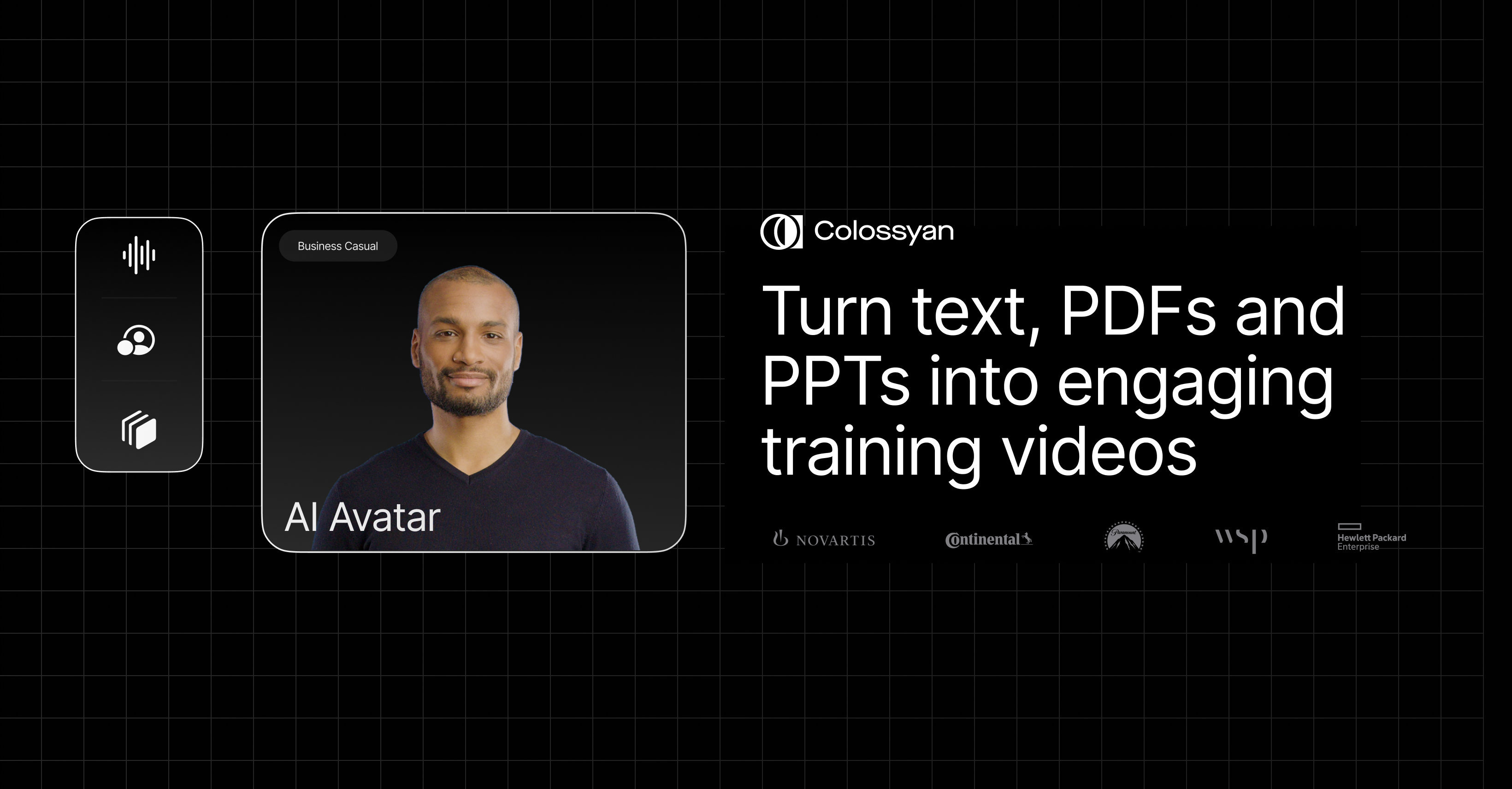
What it is. Colossyan is an avatar video platform aimed at learning and development. It lists 300+ stock avatars, 700+ stock voices and 120+ languages, interactive videos with in-video questions, and SCORM export from the Professional plan. Its NEO 2 research page (dated January 2026) describes a full-body, audio-driven model with hand gestures and consistent identity across any duration. That is a vendor claim, and NEO 2 was not part of the Avatar Arena.
We retrained NEO1. The face now reads the emotion in the audio, not just the timing.
— @colossyan November 3, 2026
| Pricing (as of November 21, 2026) | Starter is free. Professional is $59 per month on yearly billing (the page labels it 34% off; we did not capture the monthly price). Extra members $30 per month. Enterprise is custom. |
| Free tier or trial | Starter: 20 minutes of NEO video per month, 15 custom avatars and 3 voices, 10 interactive videos and 15 auto translations per month, watermark. |
| Limits to know | Professional includes 30 minutes of NEO and 10 minutes of NEO 2 per month, 5 SCORM exports per month and up to 3 editors. A studio custom avatar is a $1,000 per year add-on. |
| API or agent access | Yes. API access is listed with 360 minutes per year on Professional. |
Pros
- A genuine free plan with interactive videos and auto translation.
- SCORM export and interactive quizzes make it practical for LMS delivery.
- Enterprise tier lists SOC 2 Type II, SSO and EU or US data residency.
- Colossyan says avatar creation needs a verified consent record, which helps compliance teams.
Cons
- Only 10 minutes per month of the newer NEO 2 model on Professional.
- Not benchmarked in the independent Arena, so realism claims rest on the vendor.
- Free plan carries a watermark, and watermark removal is a paid feature.
- Seats cost $30 per month each beyond the included editors.
Benefits for you
- You can test the full workflow, including interactivity, for free.
- Training teams get quizzes and SCORM without a separate authoring tool.
- Consent enforcement reduces the risk of a misused likeness.
Standout use case. Onboarding courses that must sit inside a learning management system. Skip it if you are making social ads or personal-brand clips, where Creatify, Captions and HeyGen fit better.
4. Creatify
What it is. Creatify sells avatar video, product video, an Ad Agent and an API, with a focus on ads. Its Aurora model turns a still image into a talking video. In the Avatar Arena, Aurora 2.0 ranked second on both boards (1,053 personal, 1,088 stock), and the report says Creatify matched or beat HeyGen on lip sync about one time in three.
One caveat from that report: Creatify’s personal-avatar voice was produced with HeyGen’s voice cloning, so its voice scores partly reflect HeyGen’s technology.
Aurora 2.0 is #1 of 8 avatar models on our benchmark. 90.5 score. 9.14 lip sync. 7 cents per second. 2x faster.
— @Creatify_Labs October 31, 2026
That ranking is Creatify’s own benchmark and is a vendor claim. The independent Arena puts Aurora 2.0 second, behind HeyGen.
| Pricing (as of November 21, 2026) | Standard $15 per month ($10 billed yearly, 55 credits). Pro $55 ($38 yearly, 280 credits). Ultra $95 ($66 yearly, 730 credits). Business from $195 ($136 yearly). Enterprise custom. API Starter $99 per month and API Pro $299 per month. |
| Free tier or trial | No free plan on the pricing page we read. |
| Limits to know | Standard videos up to 2 minutes with 300 AI actors; Pro up to 10 minutes with 1,500 actors and 3 custom avatars. Credits are consumed by model and length. |
| API or agent access | Yes, sold as separate API plans; the site also lists MCP support for Claude and ChatGPT. |
Pros
- Second on both Avatar Arena boards, clearly ahead of the stock-board providers below it.
- Cheapest paid ladder among the realism leaders: $10 per month billed yearly to start.
- Ad templates, product video and an Ad Agent in the same account.
- Faster than HeyGen in the Arena (a little over two minutes typical).
Cons
- No free tier on the pricing page.
- Standard plan is only 55 credits, which is a small number of clips.
- Trails HeyGen by a wide margin in the Arena (about 144 Elo on personal, 149 on stock).
- Built for ads, so long-form training features are thinner.
Benefits for you
- You get Arena-tier quality at a lower monthly entry point.
- Ad-first tools reduce the time from product URL to finished creative.
- A separate API plan lets you automate without a seat licence.
Standout use case. Performance marketers producing many short UGC-style ads. Skip it if you need a free trial, SCORM, or a long training course.
5. Captions (Mirage)
What it is. Captions sells AI actors, AI twins, a chat-based editor and AI translation under one subscription. Its avatar model is called Mirage Avatar X, announced on July 28, 2026, which Captions says generates the whole performance (expression, voice and motion) at once. The Arena lists the same model as Captions Avatar X. The pricing page says a twin needs only ten seconds of source footage recorded in the app.
| Pricing (as of November 21, 2026) | Max $24.99 per month (500 credits, 2 seats). Frontier $69.99 per month (1,400 credits, 3 seats). The page notes the prices and features shown reflect iOS plans. Business via sales (Tesseract). |
| Free tier or trial | A free version exists with basic editing; AI generation needs a paid plan. |
| Limits to know | Unused credits roll over, up to three times the monthly allowance. In the Arena, about 7% of Captions videos failed to generate and typical render time was about eight minutes. |
| API or agent access | Yes. Captions documents a Mirage API (overview at captions.ai/help/docs/api/overview). |
Pros
- An all-in-one editor: clips from long video, captions, B-roll, music and AI twins.
- Rolling credits for up to three months of allowance.
- Ten seconds of footage is enough to make a twin, per the vendor.
- Moderate entry price at $24.99 per month.
Cons
- Fourth of five on the Arena personal board (896 Elo), not statistically separable from fifth.
- Slowest in the Arena, with the highest failure rate in the sample.
- At least nine in ten voters said HeyGen avatars moved more naturally.
- The pricing page we read describes iOS plans, so web pricing may differ.
Benefits for you
- One app covers editing and avatars if you publish short-form from a phone.
- A chat-based editor reduces manual timeline work.
- Credit rollover softens slow months.
Standout use case. A creator who films on a phone and wants the avatar to stand in for re-takes. Skip it if avatar realism is the main criterion; the Arena favours HeyGen and Creatify.
6. D-ID
What it is. D-ID’s site lists a Video Studio, Visual AI Agents for real-time conversation, AI avatars, 120+ languages and integrations with PowerPoint, Canva and Google Slides. Minutes are shared between the web studio and the API.
| Pricing (as of November 21, 2026) | Trial free (3 minutes). Lite $4.7 per month ($56 billed annually, 10 minutes per month). Pro $16 per month ($191 billed annually, 15 minutes). Advanced $108 per month ($1,293 billed annually, 100 minutes). Enterprise custom. |
| Free tier or trial | Trial with a full-screen watermark, 100+ stock avatars and one personal avatar. |
| Limits to know | Minutes round up to 15 seconds and unused minutes expire monthly. Video length is limited to 5 minutes on the studio and API. Lite carries a D-ID watermark; Pro uses an AI watermark and adds a commercial license. |
| API or agent access | Yes, from the same minute balance; key generated on the account page. |
Pros
- The cheapest paid start in this roundup at $4.7 per month on annual billing.
- Real-time agents and an API on the same minute balance.
- Pro adds a commercial license, premium voices and a voice clone.
- Integrations with PowerPoint, Canva and Google Slides.
Cons
- Very small minute allowances: 10, 15 and 100 minutes per month.
- Watermarked on Trial and Lite, with a full-screen watermark on the trial.
- Not in the independent Arena, so no neutral realism score.
- Our static fetch could not read the plans, so we read them in a rendered browser view; the monthly-billing prices may differ from the annual ones shown.
Benefits for you
- A low-risk way to try avatars and an API for a few dollars.
- Developers can prototype agents and videos against one balance.
- Presentation integrations shorten slide-to-video work.
Standout use case. A developer building a talking assistant on a small budget. Skip it if you need long videos, no watermark, or the top realism. For voices that pair with real-time faces, see our voice AI agent platforms roundup.
7. Tavus
What it is. Tavus builds real-time conversational video. Its Phoenix model renders a face that listens and responds in a live call; Phoenix-4.5, published on September 10, 2026, extends rendering to the head, shoulders and torso and is stated to run at 134 ms from audio to video (a vendor figure). Raven-1 handles perception and Sparrow-1 handles turn-taking. A replica can be created from about one minute of video, per the pricing page.

Introducing Griffin, the first model to pass the video Turing test. 48% of people who talked to it live thought it was a real human.
— @tavus October 1, 2026
A vendor claim about a related model. We did not test it, and it is not an Avatar Arena result.
| Pricing (as of November 21, 2026) | Developers: Basic free, Starter $59 per month, Growth $397 per month, Enterprise custom. Consumer PALs: Free (15 minutes) and $20 per month (150 minutes). Annual plans carry a 20% discount. Overage on the Growth column is $0.37 per conversational minute. |
| Free tier or trial | Basic: 25 minutes of conversational video, 5 minutes of AI video generation, 25 stock replicas, 30+ languages. |
| Limits to know | Starter includes 100 minutes of conversational video, 10 minutes of generated video and up to 3 concurrent streams; Growth includes 1,250 minutes and up to 10 streams. Extra replicas cost $65 each. |
| API or agent access | Yes. This is the main product: an API for conversational video. |
Pros
- Built for live conversation, not just pre-rendered clips.
- A free developer plan with real minutes.
- SOC 2 and HIPAA listed on the enterprise tier.
- Phoenix-4.5 placed third on the Arena stock board (920 Elo), tied with ranks four and five.
Cons
- Pricing is minute-based and can climb quickly at volume.
- Not a studio: there is no timeline editor aimed at marketers.
- The Arena found one in ten stock videos took more than seven minutes.
- Custom replicas beyond the plan allotment cost $65 each.
Benefits for you
- You can ship a talking support or sales agent without building a renderer.
- A free tier lets you prototype before committing.
- Enterprise compliance options help in regulated industries.
Standout use case. A live concierge or training roleplay on a website. Skip it if you only need pre-rendered marketing videos.
8. AI Studios (DeepBrain AI)
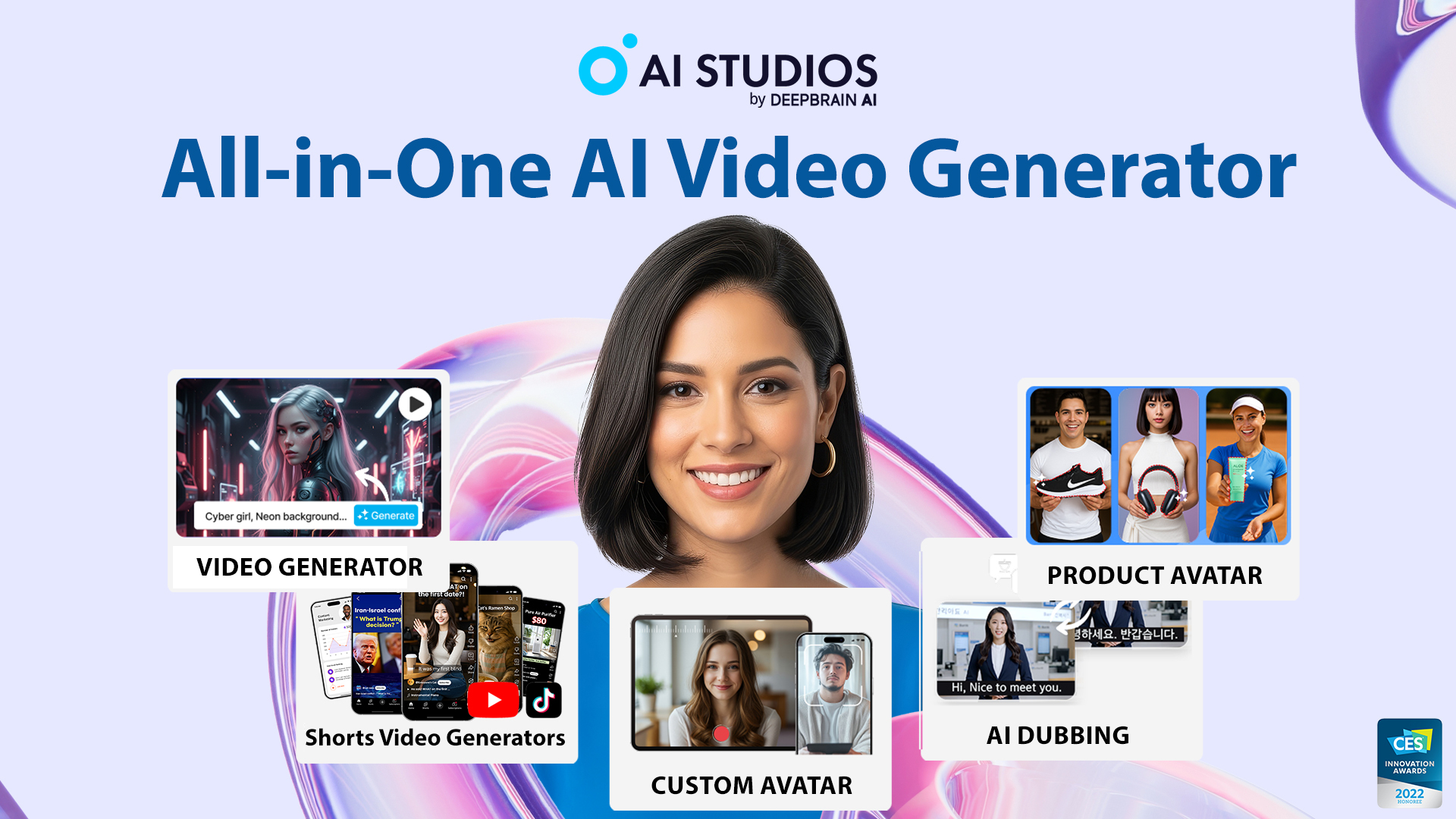
What it is. AI Studios is the avatar platform from DeepBrain AI. Its pricing page lists 2,000+ AI-generated avatars, 700+ templates, AI dubbing with lip sync and a separate interactive avatar plan. Avatar video costs 9 credits per minute, so the 700-credit Personal plan covers roughly 77 minutes of avatar video a month.
| Pricing (as of November 21, 2026) | Free $0. Personal $24 per month billed yearly ($29 monthly, $288 per year). Team $55 per seat per month (minimum 2 seats). Enterprise custom. Interactive Avatar: Free, Standard $99 per month, Enterprise. |
| Free tier or trial | Up to 3 videos of 1 minute each, 1 avatar slot, 720p, 12 one-time credits, watermark. |
| Limits to know | Personal: 700 credits per month, videos up to 30 minutes, 3 avatar slots, 1080p. Team: 1,000 credits per seat, up to 60 minutes, 5 avatar slots, 4K. Refunds within 14 days if unused. |
| API or agent access | Not confirmed on the pricing page; Enterprise lists SAML SSO, SCORM and bulk generation. |
Pros
- Roughly 77 minutes of avatar video per month on the $24 plan.
- Lip-synced dubbing at 6 credits per minute.
- Interactive avatars are available as a separate plan.
- 14-day refund on unused plans.
Cons
- Not in the independent Arena, so no neutral realism score.
- Only 3 avatar slots on Personal.
- Team plan requires at least two seats.
- We could not confirm a public API on the pricing page.
Benefits for you
- A lower cost per minute than most Western rivals on annual billing.
- Dubbing and avatars in one subscription.
- A clear refund policy lowers the cost of trying it.
Standout use case. News-style or explainer volume at a budget. Skip it if you need independent proof of realism or an API-first workflow.
9. Hedra
What it is. Hedra is known for Character-3, a model that turns a portrait and an audio clip into a talking character. Its site now leads with Play, a shared canvas where an agent plans and generates across video, image and speech models. That makes it closer to a creative studio than a corporate presenter tool.
A pricing warning. We could not read live plan prices. The hedra.com/pricing page now describes model API and GPU compute rates, says Play subscription credits and the API wallet are separate, and our fetch of its plans page did not return plan prices. A third-party review dated October 12, 2026 (HamiREV) found two different lists on Hedra’s own pages (Basic $20, Pro $50, Teams $75 and Ultra $100, against Free, Lite $10, Creator $30 and Professional $75), and cites an August 2026 article that listed Basic $15, Creator $30 and Professional $75. These disagree, so we do not rank Hedra on price.
| Pricing (as of November 21, 2026) | Not confirmed on a live vendor page. Third-party reports range from $10 to $75 per month for paid tiers; confirm at checkout. |
| Free tier or trial | A third-party review of Hedra’s plans page reports a Free plan with 300 credits, slower generation and no commercial use; other reviews report 100 credits. Not confirmed by us. |
| Limits to know | Credit-based. A third-party review puts Character-3 at 3 credits per second at 540p on the plans page; credit rollover rules differ between Hedra’s docs and its plans page, per the same review. |
| API or agent access | Yes. REST API and CLI use a separate prepaid wallet; MCP uses the billing mode you select. |
Pros
- Character-3 handles stylised and non-human characters, not just office presenters.
- Play supports video, image and speech on one shared canvas.
- An API, CLI and MCP connector for automation.
- Skills and Elements let a team save characters and brand references.
Cons
- Pricing is confusing, with different plan lists across hedra.com pages.
- Not in the independent Arena.
- A third-party review cites a 1.7 out of 5 Trustpilot rating centred on billing and refunds; treat this as a risk to check, not a verdict.
- Less suited to compliance-heavy corporate training.
Benefits for you
- Creators can animate a brand mascot or illustrated character from audio.
- Agent features reduce manual prompt iteration.
- API access suits pipelines that mix avatar and generative video.
Standout use case. Animated characters and music-style performance clips. Skip it if you need predictable per-minute pricing or a corporate presenter. For pure text-to-video models, see our best AI video generators roundup.
10. Argil
What it is. Argil frames itself as a place to direct video with credits. Its pricing page says credits are used when you generate content and the amount depends on the model; you choose a monthly allowance with a selector. The plan list changed in mid-2026: a third-party review that checked an archived copy of the old page says the fixed Classic, Pro and Scale plans were replaced by a credit selector by early September.
A pricing warning. Argil’s pricing page renders its plan cards with JavaScript and our fetch could not read the numbers. We therefore quote Argil’s own blog (October 30, 2026), which says the self-serve Pro plan starts at $50 per month, Studio (labelled done with you) is $1,250 per month and Enterprise starts at $2,500 per month. A third-party review puts the $50 tier at 2,000 credits, about eight 15-second videos by Argil’s own estimate.
| Pricing (as of November 21, 2026) | Pro from $50 per month; Studio $1,250 per month; Enterprise from $2,500 per month (Argil blog, Oct 30, 2026). A third-party review lists ten Pro credit tiers up to 100,000 credits. |
| Free tier or trial | None found. |
| Limits to know | Plan credits refresh monthly and do not stack. Extra pay-as-you-go credits do not expire, per the pricing FAQ. Pro includes one seat, per the third-party review. |
| API or agent access | Not confirmed by us. |
Pros
- Credit tiers let you scale spend without changing plan.
- Pay-as-you-go credits do not expire.
- A done-with-you Studio tier for teams that want a managed setup.
- Commercial use is listed among the Pro plan features, per a third-party review of the pricing page.
Cons
- The entry tier is expensive per clip: about $6.25 per 15-second video on a third-party estimate.
- No free tier found.
- Not in the independent Arena.
- Old help pages still list retired plans, so documentation and the live page disagree.
Benefits for you
- Teams that publish a regular series can buy a predictable credit pool.
- A managed tier removes setup work.
- Unexpiring top-up credits protect against waste.
Standout use case. A creator or brand running a recurring video series. Skip it if you want a free test, a cheap entry price or a classic presenter-style studio.
Also Worth Knowing: Pictory, Vozo and HeyGen Hyperframes
We list these separately because they are not full avatar generators in the same sense as the ten above.
Pictory. Pictory is a script-to-video editor with stock avatars on Starter and cloned avatars on Professional. The pricing page shows Starter at $12.50 per month billed annually or $14.50 monthly, Professional at $17.50 annually or $29.50 monthly, and Teams at $59.50 annually or $99.50 monthly. Those figures carry a “Black Friday Offer” label against list prices of $29, $59 and $199, so expect them to change. It is a good fit if you want stock footage, voices and a lightweight avatar in one editor.
Vozo. Vozo focuses on dubbing, lip sync and visual translation. Its pricing page lists a free tier and plans at $29 and $99 per month, with approximate minutes of AI dubbing, lip sync and visual translation on each. It is not an avatar generator; use it to localise footage you already have.
HeyGen Hyperframes. The topic comes up in “HeyGen alternative” searches because it is open source and from HeyGen, so be precise: Hyperframes is a framework that turns HTML, CSS, media and seekable animations into deterministic MP4 files, built for use by AI coding agents. It is not an avatar generator. Its GitHub repository is licensed Apache-2.0 and showed 87,628 stars on November 21, 2026. A free desktop Studio app exists, with a Pro plan that adds HeyGen models. Pair it with avatar footage from any tool above if you want code-driven titles and layouts. Our HeyGen HyperFrames guide covers setup in detail, and the MCP servers for video editing post shows how agents edit video.
Free and Open-Source Options
If you want a free AI avatar video generator with no subscription, you have two routes: the free tiers above (watermarked and capped) or open-source models you run yourself. Star counts below come from the GitHub API on November 21, 2026.
| Project | What it does | GitHub stars | Last push | License field |
|---|---|---|---|---|
| LivePortrait | Animates a portrait from a driving video | 19,541 | June 1, 2026 | Not auto-detected; read the repo |
| SadTalker | Talking-head video from one photo and audio | 14,214 | June 26, 2024 | Not auto-detected; read the repo |
| Wav2Lip | Lip sync a face video to new audio | 13,282 | June 22, 2025 | None listed by the API; read the repo |
| HeyGen Hyperframes | HTML to MP4 framework (not an avatar model) | 87,628 | November 21, 2026 | Apache-2.0 |
These need a GPU, comfort with Python and time. Output quality is below the commercial leaders for most users, and SadTalker has not been updated since 2024. Licenses vary, and some research projects restrict commercial use, so read each repository before you ship anything paid. For a free script-to-short-video pipeline built from open components, see our MoneyPrinterTurbo guide, and for voices see the text-to-speech API roundup.
A second third-party ranking, from Terry Bay. We did not verify its numbers; compare its picks with the Arena data above.
Pricing Table
Every price below was read from a vendor page on November 21, 2026, except where the row says otherwise. Hedra is left out because we could not confirm its live plans.
| Tool | Plan | Price | What you get (per vendor page) |
|---|---|---|---|
| HeyGen | Free | $0 | 3 videos per month, watermarked, up to 1 minute each |
| HeyGen | Creator | $29 per month | 600 credits, 1080p, branding removed, 175+ languages |
| HeyGen | Pro | $49 per month | 1,000 credits (tiers up to 100,000 credits at $4,300), 4K, 1 professional voice clone |
| HeyGen | Business | $149 per month | 1,500 credits, SSO, SCORM export, 5 custom avatars, extra seats $20 per month |
| Synthesia | Basic | $0 | Watermarked, Syren videos capped at 3 minutes |
| Synthesia | Starter | $19 per month ($9 first month) | 125+ avatars, 3 personal avatars |
| Synthesia | Pro | $99 monthly or $79 billed yearly | 180+ avatars, up to 10 team members, 140+ translation languages, extra seats $20 |
| Colossyan | Starter | Free | 20 minutes of NEO per month, 15 custom avatars, watermark |
| Colossyan | Professional | $59 per month billed yearly | 30 minutes NEO and 10 minutes NEO2 per month, 5 SCORM exports, extra member $30 |
| Creatify | Standard | $15 monthly or $10 billed yearly | 55 credits, 300 AI actors, videos up to 2 minutes |
| Creatify | Pro | $55 monthly or $38 billed yearly | 280 credits, 1,500 actors, 3 custom avatars, up to 10 minutes |
| Creatify | Ultra | $95 monthly or $66 billed yearly | 730 credits, 6 custom avatars, 3 seats |
| Captions | Max | $24.99 per month | 500 credits, AI twins, chat editor, 2 seats |
| Captions | Frontier | $69.99 per month | 1,400 credits, 3 seats, top generative models |
| D-ID | Lite | $4.7 per month ($56 billed annually) | 10 minutes per month, D-ID watermark |
| D-ID | Pro | $16 per month ($191 billed annually) | 15 minutes per month, premium voices, 1 voice clone, commercial license |
| D-ID | Advanced | $108 per month ($1,293 billed annually) | 100 minutes per month, 5 personal avatars, 3 voice clones |
| Tavus | Starter (developer) | $59 per month | 100 minutes of conversational video, 10 minutes of generated video, 3 replica trainings |
| Tavus | Growth (developer) | $397 per month | 1,250 conversational minutes, 100 generated minutes, 7 replica trainings |
| AI Studios | Personal | $24 per month yearly ($29 monthly) | 700 credits, videos up to 30 minutes, 1080p, 3 avatar slots |
| AI Studios | Team | $55 per seat per month | 1,000 credits per seat, 4K, 5 avatar slots, minimum 2 seats |
| Argil | Pro | From $50 per month | 2,000 credits at the entry tier (per Argil's blog and a third-party review) |
| Argil | Studio | $1,250 per month | Done-with-you service with $1,250 of monthly credits |
Feature Matrix
“n/c” means we could not confirm the feature on a vendor page. “Partial” means limited or a trial rather than a full plan.
| Tool | Free tier | Custom avatar from your footage | SCORM export | Public API | Dubbing or translation | Real-time conversation |
|---|---|---|---|---|---|---|
| HeyGen | Yes | Yes | Yes (Business) | Yes | Yes | n/c |
| Synthesia | Yes | Yes | n/c | Yes | Yes | Partial (interactive avatars API) |
| Colossyan | Yes | Yes | Yes (Professional) | Yes | Yes | n/c |
| Creatify | No | Yes | n/c | Yes | n/c | n/c |
| Captions (Mirage) | Partial | Yes | n/c | Yes | Yes | n/c |
| D-ID | Partial (trial) | Yes | n/c | Yes | Yes | Yes (Agents) |
| Tavus | Yes | Yes | n/c | Yes | n/c | Yes |
| AI Studios | Yes | Yes (avatar slots) | Yes (Enterprise) | n/c | Yes | Yes (interactive avatars) |
| Hedra | Partial | Partial (image-based) | n/c | Yes | n/c | n/c |
| Argil | n/c | n/c | n/c | n/c | n/c | n/c |
Best for X: Decision Table
| If you need | Pick | Reason |
|---|---|---|
| Most natural-looking presenter | HeyGen | Only independent blind-vote evidence we found places it first on both boards. |
| Corporate training with LMS export | Colossyan or HeyGen Business | Both list SCORM; Colossyan adds interactive videos and a free plan to test. |
| Enterprise procurement and seats | Synthesia | Seats, SSO, 140+ translation languages and custom contracts. |
| Paid social ads | Creatify | Ad templates, 300 to 1,500 actors, second place in the Arena. |
| Short-form creators on a phone | Captions (Mirage) | Editing, captions and AI twins in one app at $24.99 per month. |
| Lowest-cost paid avatar | D-ID Lite | $4.7 per month billed annually, with a D-ID watermark. |
| A live talking agent on your site | Tavus or D-ID | Both sell real-time conversational video through an API. |
| Multilingual dubbing at low price | AI Studios | Lip-synced dubbing from the $24 per month Personal plan. |
| Stylised characters and performance | Hedra | Image plus audio to a talking character; check pricing at checkout. |
| Self-hosted, no subscription | LivePortrait, SadTalker, Wav2Lip | Open source, GPU required, licenses differ. |
Common Mistakes and Buying Checklist
- Comparing monthly sticker prices without checking minutes or credits. HeyGen, Synthesia, Creatify, Captions and Hedra bill in credits, D-ID in minutes rounded up to 15 seconds, and a $15 plan can run out in a handful of clips.
- Judging realism from vendor demo reels. Use the blind-vote Arena as one signal and run your own script, in your own language, on each free tier.
- Ignoring the watermark. On free tiers it is mandatory, and D-ID applies a visible watermark on Lite as well.
- Assuming credits roll over. D-ID minutes expire monthly, Argil plan credits do not stack, and Synthesia monthly credits do not roll over; HeyGen rolls credits over for one month on monthly plans.
- Skipping the license. Free and entry plans are often personal-use only. D-ID, for example, lists a commercial license starting at Pro.
- Cloning a person without consent. Get written permission, and prefer vendors that enforce a consent step.
- Locking into one vendor for the API. Prices and model names changed several times this year (Argil replaced its plan lineup mid-2026, and Hedra's own pages disagree), so keep your scripts and assets portable.
- Treating a listed language count as quality. Test pronunciation of names, numbers and jargon.
A short checklist before you pay:
- Render the same 60-second script on two free tiers in your target language.
- Compute minutes per dollar, not dollars per month.
- Confirm the watermark, commercial license and seat rules for your plan.
- Check whether credits expire and what a re-render costs.
- Ask for the consent process if you will clone a real person.
- Read the cancellation and refund terms before you enter a card.
How We Evaluated
This is an editorial roundup built from primary and public sources, not a hands-on lab test. We read each vendor’s pricing page on November 21, 2026, using a rendered browser view where a static fetch returned too little, and we recorded every price and number in a claim ledger. We took realism evidence from the New Measure Avatar Arena report and flagged vendor-run benchmarks as vendor claims. We pulled GitHub star counts live from the GitHub API.
What we did not do. We did not render videos on each platform, so we make no claim about output quality beyond the Arena data. We did not read Hedra’s live plan page (it needs sign-in) or Argil’s rendered plan cards, and we say so in those sections. We include no affiliate links and received no payment for placement. Ranking order reflects the Arena evidence first, then breadth of features and pricing clarity.
We compared the product list against the topic record for this post. We dropped no product for being shut down; we moved Pictory, Vozo and HeyGen Hyperframes to a shorter section because they are not full avatar generators, and we added Argil and Creatify.
Frequently Asked Questions
What is the best AI avatar video generator in 2026?
On the one independent, blind-vote benchmark we found (New Measure Avatar Arena, votes from October 27 to November 16, 2026), HeyGen Avatar 6 ranked first on both the personal-avatar board (1,197 Elo) and the stock-avatar board (1,237 Elo). That is a realism result on short clips, not a verdict on every workflow. Synthesia, Colossyan and AI Studios are often a better fit for training and compliance work, and Creatify is the closest challenger for ads.
What is the best HeyGen alternative?
It depends on why you are leaving. Creatify ranked second on both Avatar Arena boards and costs less per month. Synthesia and Colossyan fit teams that need seats, governance and SCORM. D-ID and Tavus fit developers who need an API or real-time agents. AI Studios and Captions are cheaper entry points. None of them matched HeyGen's Arena scores in the sample we cite.
What is the best Synthesia alternative?
Colossyan is the nearest like-for-like option for corporate training because it offers SCORM, interactive videos and enterprise controls, and it has a free Starter plan. HeyGen is the better pick if realism and language count matter most. AI Studios is the budget option with a $24 per month yearly plan.
HeyGen vs Synthesia: which is better?
HeyGen leads on the blind-vote Arena (personal 1,197 and stock 1,237 against Synthesia EXPRESS-1 at 868 on the stock board) and starts at $29 per month. Synthesia starts at $19 per month ($9 for the first month), charges $99 per month for its next tier, and is built around team collaboration, translation and enterprise rollout. Choose HeyGen for the most natural-looking presenter and Synthesia when your buyer is an enterprise procurement team.
Is there a free AI avatar video generator?
Yes, several have free tiers with limits. HeyGen's free plan gives 3 watermarked videos per month of up to one minute. Synthesia's Basic plan is free with a watermark. Colossyan's Starter plan is free. AI Studios has a free plan with 3 videos of one minute at 720p. Tavus has a free developer tier and D-ID has a trial. Expect watermarks, short limits and personal-use licenses.
Are there open-source AI talking head generators?
Yes. LivePortrait (about 19,500 GitHub stars), SadTalker (about 14,200) and Wav2Lip (about 13,300) are open-source projects that animate a face from a photo or audio. They need a GPU and technical setup, and their licenses vary, so read each repository's terms before commercial use. HeyGen Hyperframes is different: it is an open-source HTML-to-video framework, not an avatar generator.
Can I make an AI avatar of myself?
Yes. HeyGen, Synthesia, Colossyan, Captions, Creatify, D-ID, Tavus, AI Studios and Argil all offer a personal or custom avatar, with different requirements: Captions says its AI twin needs ten seconds of source footage, Tavus says a replica can be trained from one minute of video, and HeyGen's Avatar 6 reference accepts up to 30 seconds of video plus a photo. Synthesia's studio-quality Express-1 avatar is a paid add-on at $1,000 per year on annual plans.
How much do AI avatar video generators cost?
Entry paid plans in our table run from $4.7 per month (D-ID Lite, billed annually) to $59 per month (Tavus developer Starter and Colossyan Professional billed yearly). Mid-tier team plans run from roughly $49 to $149 per month for HeyGen and $99 per month for Synthesia. Enterprise pricing is custom everywhere. Prices change often, so confirm on the vendor page.
Do AI avatar videos carry watermarks?
On free and trial plans, yes: HeyGen, Synthesia, AI Studios and D-ID all watermark low tiers. D-ID also states that its Lite plan carries a D-ID watermark and that its Pro plan uses an AI watermark for transparency. Paid plans on the other tools remove branding, but check each plan's commercial-use terms.
Which tool supports the most languages?
HeyGen lists 175+ languages on its Creator plan, Synthesia lists 140+ languages for one-click translation, Colossyan lists 120+ languages, and D-ID lists 120+ languages. Language count is a vendor claim and does not tell you how natural each voice is, so test your target language with a short script.
Which avatar tool has an API?
D-ID and Tavus are API-first platforms. HeyGen, Synthesia, Colossyan, Creatify and Captions also document APIs, and Creatify prices API access separately at $99 and $299 per month. Hedra's API uses a separate prepaid wallet from its subscriptions. API access, rate limits and per-minute costs differ, so check the developer docs before you design a pipeline around one vendor.
Are AI avatar videos legal to publish?
Generally yes when you have the rights to the likeness and voice, but rules differ by country and platform. Use only avatars you created with consent or licensed stock avatars, label synthetic media where platforms require it, and avoid cloning anyone without written permission. Colossyan, for example, says it requires a verified consent record before creating an avatar. This is not legal advice.
Is HeyGen Hyperframes an avatar generator?
No. HeyGen Hyperframes is a free, open-source (Apache-2.0) framework that turns HTML, CSS, media and seekable animations into deterministic MP4 videos, aimed at AI coding agents. You can pair it with avatar footage from other tools, but it does not generate talking avatars by itself.
Sources
- HeyGen pricing
- Synthesia pricing
- Colossyan pricing
- Colossyan NEO 2 research
- Creatify pricing
- Captions pricing
- Mirage Avatar X announcement (Captions, July 28, 2026)
- D-ID pricing
- Tavus pricing
- Tavus Phoenix-4.5 (September 10, 2026)
- AI Studios pricing
- Hedra
- Argil pricing
- Argil on AI filmmaking pricing (Oct 30, 2026)
- Pictory pricing
- Vozo pricing
- HeyGen Hyperframes (GitHub)
- LivePortrait (GitHub)
- SadTalker (GitHub)
- Wav2Lip (GitHub)
- New Measure Avatar Arena report (Nov 18, 2026)
- New Measure Arena leaderboard
- Third-party: Hedra pricing comparison (Oct 12, 2026)
- Third-party: Argil credit tiers (Oct 15, 2026)
Prices and plans change often. Always confirm on the vendor page before you buy. Related reading: best AI video generators 2026, HeyGen HyperFrames guide and best voice AI agent platforms 2026.