Get the latest on AI, LLMs & developer tools
New MCP servers, model updates, and guides like this one — delivered weekly.
For LLM fine-tuning data, start with NVIDIA NeMo Data Designer or Bespoke Curator. Both are Apache-2.0 Python libraries, free to run, and the real cost is the tokens of the generator model you point them at. For privacy-safe tabular or test data, start with DataCebo SDV if you want a library, or Tonic.ai Fabricate if you want a chat-driven tool with a free plan. Enterprises with SAP or mainframe estates should talk to Synthesized, K2view or Syntho.
The market also reshuffled. NVIDIA took Gretel, Syntho bought the MOSTLY AI brand, SAS absorbed Hazy, KPMG bought YData's technology, and Bespoke Labs raised $40 million while shifting its story toward RL environments. Several well-ranked 2025 guides still recommend products that no longer exist as standalone services.
Video: Tonic.ai's own walkthrough of the Fabricate Data Agent, a good picture of the chat-driven style of synthetic data tool (Tonic AI YouTube channel).
Quick Picks
| Use case | Pick | Why |
|---|---|---|
| Best open-source framework for LLM training data | NVIDIA NeMo Data Designer | Apache-2.0, declarative columns, samplers for diversity, validators and LLM judges, MCP tool use for agent traces, push to Hugging Face. v1.0.1 on PyPI. |
| Best lightweight library for bulk LLM generation | Bespoke Curator | Apache-2.0 Python library: a prompt/parse class, caching, retries, batch mode, structured outputs. Now with Tinker and Fireworks fine-tuning hooks. |
| Best for privacy-safe relational test data | DataCebo SDV | Learns multi-table databases. Free Community library under a Business Source License; Enterprise from $500 per user per month plus $1 per million sampled cells. |
| Best no-code start for app and test data | Tonic.ai Fabricate | Chat with a Data Agent. Free plan with $10 of monthly credits, Plus at $29 per month, exports to CSV, JSON, Parquet, Avro and more. |
| Best for SAP and enterprise test data management | Synthesized | Package pricing by data in scope with no usage or token charges; 10-day fixed-fee validation. |
| Best for time-series and agent eval data | Rockfish Data | Schema or sample in, labelled incidents injected, ground-truth Q&A out. Free access by request. |
| Best if you need quality filtering for pre or mid-training | DatologyAI | Clean, calibrate, create and compose pipeline deployed in your cloud. Sales-led. |
| Best for preference and AI-feedback pipelines | distilabel | Apache-2.0, built for judge and preference data, but the maintainers say the original authors moved on. |
Two Jobs, Two Toolkits
Most comparison pages mix these categories and then rank tools that do not compete. A library that calls GPT-class models to write instruction data has almost nothing in common with a platform that learns the foreign keys of an Oracle database. The first group is judged on diversity, correctness and token cost. The second is judged on referential integrity, statistical fidelity and privacy risk. Use this table to jump to the right half.
| Data you need | Job | Tools that fit | How it is generated |
|---|---|---|---|
| Instruction (SFT) data | LLM training data | NeMo Data Designer, Bespoke Curator, distilabel | Prompted LLM calls, seed data, samplers for diversity |
| Preference or judge data | LLM training data | distilabel, NeMo Data Designer (LLM-judge columns) | A second model scores or ranks candidates |
| Agent traces and tool-use data | LLM training data | NeMo Data Designer (MCP tools, rollout ingestion), Curator (function-calling and code-execution examples), Rockfish (eval scenarios) | Run tools or replay rollouts, then distill |
| Pretraining or mid-training corpora | LLM training data | DatologyAI, NeMo Data Designer | Filter, rebalance and add synthetic rows |
| Test data from a production database | Tabular and test data | SDV, Synthesized, K2view, Syntho, Tonic (Structural) | Learn the schema and statistics, or mask and subset |
| Test data from nothing (no source data) | Tabular and test data | Tonic Fabricate, SDV Enterprise, Synthesized, Rockfish SchemaFuel | Schema, rules or a prompt |
| Time-series and telemetry | Tabular and test data | Rockfish Data | Generative models plus scenario injection |
| Redacting free text before it reaches a model | Tabular and test data | Tonic Textual | NER detection, redaction or synthetic replacement |
Two related guides in this batch cover the neighbouring steps: how to choose where to run the fine-tune in our fine-tuning and post-training platforms comparison, and how to get raw PDFs into a training set in PDF documents to AI training data tools.
Master Comparison Table
Prices come from each vendor's own page fetched on November 26, 2026. Where a vendor does not publish a price, the cell says so instead of guessing. Open source means a license on a public repository; the SDV Business Source License is source-available, not open source by the OSI definition, and its own LICENSE text says so.
| Tool | Pricing (as of Nov 26, 2026) | Free tier | Self-host | Open source | Standout |
|---|---|---|---|---|---|
 Tonic.ai | Fabricate: Free $0 ($10 monthly credits), Plus $29 ($25 credits, then pay as you go), Enterprise custom. Structural and Textual: sales or usage-based | Yes (Fabricate Free) | Enterprise (self-hosted) | No (some SDKs on GitHub) | Chat agent, mock APIs, MCP |
 NeMo Data Designer | Library free (Apache-2.0); you pay your model provider. NeMo microservice via NVIDIA platform, no public price found | Yes (library) | Yes (library) or microservice | Yes | Declarative columns, validators, MCP traces |
 Bespoke Curator | Library free (Apache-2.0); you pay your model provider. Hosted API at console.bespokelabs.ai (pricing not found) | Yes (library) | Yes | Yes | Batch mode, caching, resume |
 DataCebo SDV | Community free (BSL); Enterprise Developer $500 per user per month + $1 per 1M sampled cells; bundles $250 each; Team custom | Yes (Community) | Yes (Python SDK in your environment) | Source-available (BSL 1.1) | Multi-table generative models |
 distilabel | Free (Apache-2.0); you pay your model provider | Yes | Yes | Yes | AI feedback and preference pipelines |
 Synthesized | Packages by data in scope (Starter 500 GB, Growth 3 TB, Enterprise, Scale); contact sales; no usage or token charges | Free 30-minute health check only | Runs in your environment | No | SAP test data, AI agent environments |
 Syntho | Basic, Standard, Ultimate by quote; feature-based, no consumption charges | Demo only (as far as the page says) | Yes (own environment or on-prem) | No (MOSTLY AI SDK is Apache-2.0) | Masking plus rules plus AI generation |
 YData | SDK: free monthly credit; $1 per credit (1 credit per 1M data points or 10,000 tokens); Fabric plans listed; acquired by KPMG (Oct 2025) | Yes (free credit) | Fabric self-hosted on AWS or Azure, on-prem on request | ydata-synthetic is MIT | Profiling plus synthesis |
 Rockfish Data | Free access by request; paid pricing not published | Yes (by request) | Own VPC, on-prem or Snowflake Native App | No | Time-series and scenario injection |
 K2view | Not published; sales | No | Yes (enterprise) | No | Entity-based generation across systems |
 DatologyAI | Not published; talk to a data expert | No | Deployed in your private cloud | No | Data refinery: clean, calibrate, create, compose |
 Snorkel AI | Not published; expert data and environment development | No | Not stated | No | Expert-curated datasets for frontier labs |
What Changed (Gretel, MOSTLY AI, Hazy, YData)
Check this list before you trust any older recommendation. Where we rely on press instead of the companies themselves, we say so.
- Gretel is part of NVIDIA. TechCrunch reported on March 19, 2025 that NVIDIA had acquired Gretel, with terms unknown; Wired, as summarized in search coverage, put the price in the nine figures. On our check, gretel.ai redirects to an NVIDIA page on synthetic data generation for agentic AI, and the gretel-synthetics repository is archived (last push June 2025). NVIDIA now maintains NeMo Data Designer and NeMo Safe Synthesizer under Apache-2.0. NVIDIA does not say on the pages we read how much Gretel code they contain; comparison sites claim the lineage, and the Data Designer docs do seed an example from a gretelai dataset on Hugging Face.
- MOSTLY AI is now “MOSTLY AI, powered by Syntho.” Syntho announced on June 9, 2026 that it acquired the MOSTLY AI brand. Syntho's release covers the brand and related assets. Trade coverage citing CB Insights says the original company had already wound down earlier in 2026, and a research note we received said March 2026; we could not confirm either on a primary source. The Apache-2.0 SDK still shipped 6.2.1 on October 29, 2026.
- Hazy became SAS Data Maker. SAS acquired the main software assets of Hazy in November 2024 for an undisclosed price and folded them into SAS Data Maker.
- YData is owned by KPMG. KPMG announced a definitive agreement on October 16, 2025 to acquire YData's IP and technology assets and to form a Synthetic Data Center of Excellence. The ydata.ai site still lists plans and credits, but its banner says YData has been acquired. Confirm what is sold to outside customers today.
- Cleanlab joined Handshake in January 2026, according to TechCrunch-sourced coverage, described as a team acquisition of about nine people. Cleanlab is a data-quality tool rather than a generator, so it is not ranked here, but teams that used it to audit synthetic labels should plan an alternative.
- Bespoke Labs is now an RL-environment company. It announced about $40 million in July 2026 (SiliconANGLE reports $31.75 million Series A led by Wing VC plus an earlier $8.25 million). The homepage now leads with Horizon, an RL-environment platform. Curator, the library, is still Apache-2.0 and active on GitHub.
The practical lesson is the one from other crowded categories, like the LLM observability tools we compared: keep your pipeline definitions in plain code and your outputs in open formats, so a vendor change costs you an afternoon and not a quarter.
Part A: LLM Training Data
This half covers tools that produce text and structured records for fine-tuning, preference training, evals and agent training. The common mechanism is a prompted model, with seed data or samplers to make the rows different from each other, and a filter stage to throw bad rows away.
NVIDIA NeMo Data Designer
NeMo Data Designer
What it is. An open-source framework (Apache-2.0, 2,426 GitHub stars on November 26, 2026) where you declare dataset columns and the framework resolves dependencies, batches, parallelizes and retries model calls. The authors describe it in an arXiv technical report (2609.17699, September 15, 2026) as a general-purpose multimodal framework with case studies including datasets used in Nemotron development. It requires Python 3.11 to 3.14.
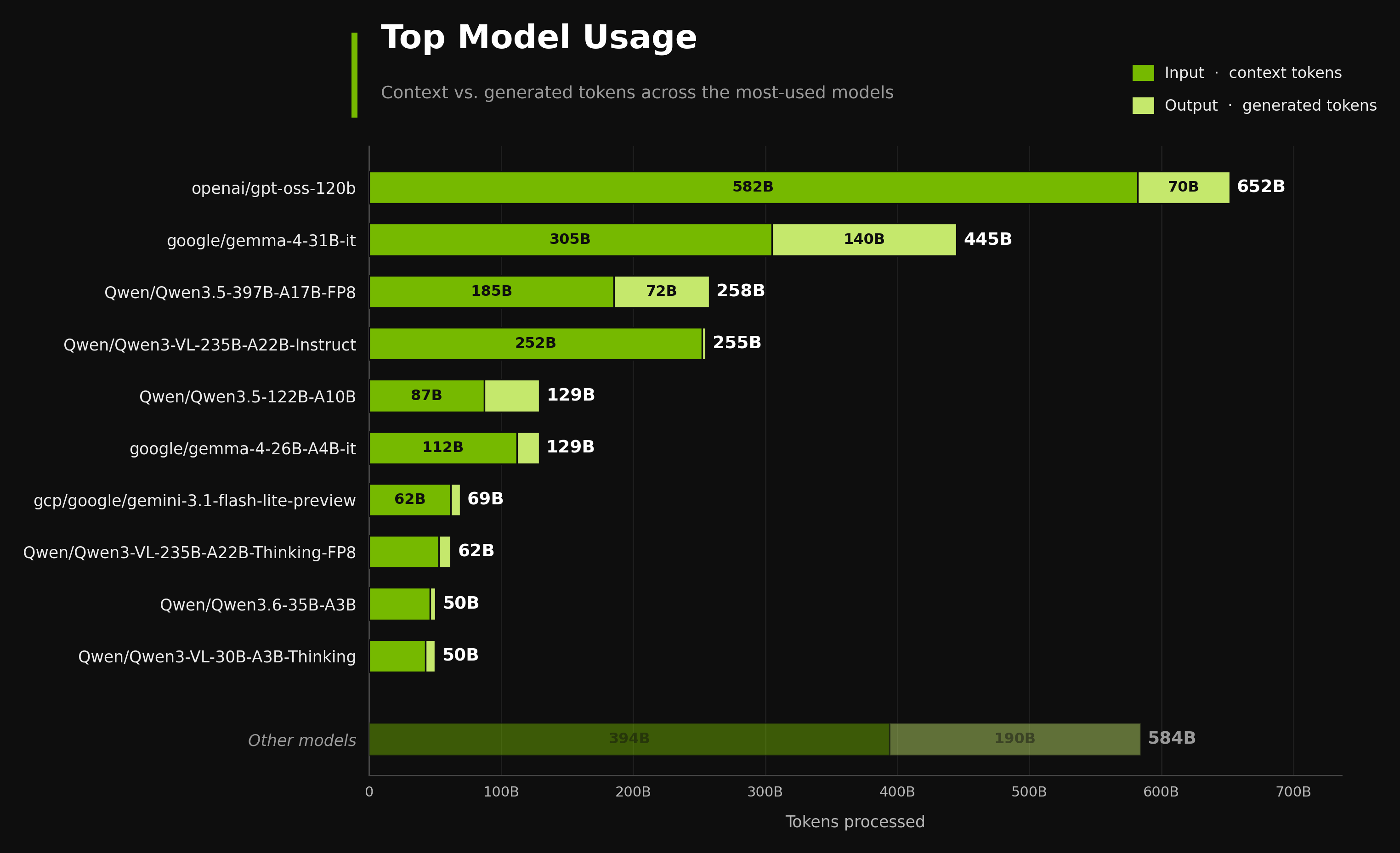
How generation works. Eleven built-in column types cover samplers (UUID, category with weights, Gaussian, Poisson and more), LLM text, LLM code, LLM structured output, LLM judge, image, embedding, expression, validation, seed dataset and custom columns. Samplers are the diversity lever: they are faster than an LLM and follow explicit distributions, and an LLM column can then be conditioned on them with a Jinja template. Seed datasets let you start from your own CSV, Parquet or JSON files, and an agent rollout seed source can ingest existing agent traces. Tool use through MCP servers captures interaction traces, which is the clearest path in this roundup to agent training data.
# pip install data-designer   (v1.0.1 on PyPI, Nov 18, 2026)
import data_designer.config as dd
from data_designer.interface import DataDesigner

data_designer = DataDesigner()
config_builder = dd.DataDesignerConfigBuilder()

# A sampler column steers diversity without an LLM call
config_builder.add_column(
    dd.SamplerColumnConfig(
        name="product_category",
        sampler_type=dd.SamplerType.CATEGORY,
        params=dd.CategorySamplerParams(
            values=["Electronics", "Clothing", "Home & Kitchen", "Books"],
        ),
    )
)

# An LLM column conditioned on the sampler
config_builder.add_column(
    dd.LLMTextColumnConfig(
        name="review",
        model_alias="nvidia-text",
        prompt="Write a brief product review for a {{ product_category }} item you recently purchased.",
    )
)

preview = data_designer.preview(config_builder=config_builder)
preview.display_sample_record()
Quality controls. Validators check generated content against rules: a Python validator runs Ruff and returns a lint score from 0 to 10 with severity levels, SQL code can be checked too, and you can plug in custom Python callables or remote HTTP validators. LLM-judge columns score rows, and a preview-and-revise loop lets you generate a handful of records, inspect them and refine the spec before a full run. A plugin pack for retrieval Q&A data documents embedding-based deduplication.
Export. Runs write batched Parquet files. A processor can reshape columns into an OpenAI-style messages list, and results.push_to_hub() publishes the dataset to Hugging Face:
# From the Data Designer dev note: reshape rows into chat format, then push
config_builder.add_processor(
    dd.SchemaTransformProcessorConfig(
        name="conversations",
        template={
            "messages": [
                {"role": "user", "content": "{{ greeting }}"},
                {"role": "assistant", "content": "{{ response }}"},
            ]
        },
    )
)
results = data_designer.create(config_builder, num_records=10_000)
url = results.push_to_hub("my-org/multilingual-greetings", "10k synthetic conversations")
Pricing. The library is free. Model calls go to NVIDIA Build, OpenAI, OpenRouter, any OpenAI-compatible server including vLLM, or an enterprise gateway, and you pay that provider. A NeMo microservice version exists for teams on the NVIDIA platform; we found no public price. Telemetry of model names and token counts is on by default and can be disabled with NEMO_TELEMETRY_ENABLED=false.
Pros. The richest quality tooling of the open libraries; first-class agent and tool-use data; multimodal; active releases (v1.0.1 on November 18, 2026); a coding-agent skill you can install with npx skills add NVIDIA-NeMo/DataDesigner.
Cons. More concepts to learn than a one-class library; defaults point at NVIDIA endpoints; no relational multi-table synthesis, so it is not an SDV replacement. Benefits for you: one declarative file you can version and re-run. Skip it if you only need 500 rows of Q&A once; a notebook and a prompt will do.
Bespoke Curator
Bespoke Curator
What it is. An Apache-2.0 Python library from Bespoke Labs, about 1,765 GitHub stars on November 26, 2026, last pushed November 2. You subclass curator.LLM, write a prompt method and a parse method, and Curator handles parallel requests, caching, retries and resuming from where a run stopped. Inference can go through LiteLLM, vLLM or batch APIs. Founder Mahesh Sathiamoorthy announced it on X on January 15, 2025.
We are happy to announce Curator, an open-source library designed to streamline synthetic data generation! High-quality synthetic data generation is essential in training and evaluating LLMs/agents/RAG pipelines these days, but tooling around this is still entirely lacking!
— @madiator January 15, 2025
Track record. The README lists datasets built with Curator: Bespoke-Stratos-17k, OpenThoughts-114k, OpenThoughts2-1M and s1K-1.1 reasoning datasets, plus data for Nimble. The README also lists Tinker (March 2026) and Fireworks AI (June 2026) integrations so you can go from curated data to a LoRA in a few lines.
# pip install bespokelabs-curator   (0.1.31, Oct 25, 2026)
from bespokelabs import curator
from pydantic import BaseModel, Field

class Topics(BaseModel):
    topics_list: list[str] = Field(description="A list of topics.")

class TopicGenerator(curator.LLM):
    response_format = Topics
    def prompt(self, subject):
        return f"Return 3 topics related to {subject}"
    def parse(self, input, response: Topics):
        return [{"topic": t} for t in response.topics_list]

# batch=True switches to the provider batch API (the README says this halves token cost)
topics = TopicGenerator(model_name="gpt-4o-mini")("Mathematics")
print(topics.to_pandas())Video: Curator's creator on data and environment curation for post-training, from the AI Engineer channel. It is a conference talk, not a product tutorial.
Quality and diversity. Curator gives you structured outputs through Pydantic schemas and a code-execution helper (local, Ray, Docker or e2b backends) so you can verify generated code. The README does not mention built-in deduplication or diversity samplers, so plan to do those yourself. Export. Results come back as a Hugging Face Dataset or pandas frame.
Pricing. The library is free. The README says setting batch=True uses a provider batch API to save 50 percent of token cost; the discount depends on the provider. Bespoke also points to a hosted API at console.bespokelabs.ai; we found no pricing for it.
Pros. Smallest learning curve in the group; caching and resume make large runs cheap to restart; proven on public reasoning datasets. Cons. Package version is 0.1.31, the company's attention has moved to RL environments (the homepage no longer leads with Curator), and quality gates are your job. Skip it if you want judge columns and validators out of the box.
distilabel (Argilla and Hugging Face)
distilabel
What it is. An Apache-2.0 framework for synthetic data and AI feedback, 3,470 GitHub stars on November 26, 2026. You compose a Pipeline of steps and tasks, including text generation, judging and preference scoring, with integrations for Anthropic, OpenAI, Hugging Face endpoints, vLLM, Ollama, llama.cpp and many others. Argilla joined Hugging Face in June 2024.
More is less for DPO, high quality matters! Dropping our first open dataset and LLM of the year: distilabel Orca Pairs DPO, an improved version of the now famous dataset from @intel, and a new OpenHermes model outperforming baselines with 54% less DPO pairs.
— @argilla_io January 10, 2024
Where it shines. Preference data. The README points to OpenHermesPreferences, a roughly one-million-row AI-preference dataset, and says a distilabeled Intel Orca DPO dataset improved a model by filtering out about 50 percent of the original pairs. Optional extras add MinHash duplicate detection, embeddings with faiss, UMAP and scikit-learn clustering, Ray scaling and Argilla export.
# pip install "distilabel[hf-inference-endpoints]" --upgrade   (last PyPI release 1.5.3, Jan 28, 2025)
from datasets import load_dataset
from distilabel.models import InferenceEndpointsLLM
from distilabel.pipeline import Pipeline
from distilabel.steps.tasks import TextGeneration

with Pipeline() as pipeline:
    TextGeneration(
        llm=InferenceEndpointsLLM(
            model_id="meta-llama/Meta-Llama-3.1-8B-Instruct",
            generation_kwargs={"temperature": 0.7, "max_new_tokens": 512},
        ),
    )

if __name__ == "__main__":
    dataset = load_dataset("distilabel-internal-testing/instructions", split="test")
    distiset = pipeline.run(dataset=dataset)
    distiset.push_to_hub(repo_id="distilabel-example")
Today is a big day for Argilla and the Open Source AI community: We're joining @huggingface! Time to double down on community and data-centric, open source AI.
— @argilla_io June 13, 2024
The caveat. The first lines of the README now say the original authors have moved on and community members have joined as collaborators to maintain it. The last GitHub release is 1.5.3 from January 28, 2025, the main branch shows commits in December 2025, and PyPI still offers 1.5.3. It works, but treat it as community-maintained: pin versions and expect model integrations to lag.
Pricing. Free; you pay your model provider. Pros. Best-documented preference-data patterns, Hugging Face push in one call, deduplication extra. Cons. Stalled release cadence, Python 3.9+ target that predates newer model APIs. Skip it if you need agent or tool-use traces; look at Data Designer.
DatologyAI
DatologyAI
What it is. A sales-led data refinery for teams that train their own models. Datology says it does not sell data or source tokens; it runs on your data (proprietary, public web or licensed) inside your private cloud through four stages: clean (remove malformed, empty, short and eval-contaminated rows), calibrate (by quality, task and taxonomy), create (generate synthetic data for relevance and diversity) and compose (mix sources into staged training sets).
Evidence. Its homepage cites a legal-domain mid-training case study with gains of +5 percent on LegalBench and more than 2.5 times post-training amplification, on a 100B-token mid-training budget against 15T tokens of pre-training. Those numbers are vendor-reported. SiliconANGLE covered a $46 million round in May 2024, following an $11.65 million seed.
Pricing. Not published. Pros. Works at corpus scale, where row-by-row prompting does not; your data stays in your cloud. Cons. Opaque pricing, no self-serve tier, aimed at foundation and mid-training work rather than a 5,000-row LoRA. Skip it if your dataset fits in a spreadsheet. For smaller fine-tunes, see our guide to fine-tuning small models on device.
Snorkel AI
Snorkel AI
What it is, today. Snorkel's site now describes research-led data and environment development for frontier AI: expert-curated datasets, specialized agents, and open benchmarks, including a grants programme it says it is expanding to a $30 million commitment. That is a services and data business, not a self-serve generator. Its pricing page returned a 404 when we fetched it, so we have no prices.
Why it is here. If your bottleneck is expert-quality labels, evaluation sets or agent environments that a model cannot fake, human-expert data from Snorkel (or Scale AI, whose Data Engine page lists prompt-response generation, RLHF, red teaming and evaluation) is the alternative to synthetic generation, and the two combine well: experts write a gold set, a library like Data Designer expands it. Pros. Expert human signal. Cons. Sales-led, expensive per row compared with model generation, no public pricing. Skip it if you need self-serve, scripted data generation.
Part B: Tabular and Test Data
This half covers tools that produce rows that behave like a production database: correct types, valid foreign keys, plausible distributions, and no real customers. Two methods dominate: generative models trained on your data (statistical or neural), and rule or prompt based generation from a schema. Masking and subsetting of real data often sits next to both.
Tonic.ai
Tonic.ai
What it is. Three products. Fabricate synthesizes relational data, free text, files and mock APIs from scratch by chatting with a Data Agent, with API and MCP access. Structural de-identifies, subsets and synthesizes structured data from real databases. Textual detects sensitive entities in unstructured text and files and redacts them or replaces them with synthetic values. Tonic announced the Fabricate Data Agent on November 25, 2025, and raised a $35 million Series B in September 2021 per its own blog.
Pricing (as of Nov 26, 2026). Fabricate Free is $0 per month with $10 of monthly credits (work email required, no card), basic export, mock APIs and API and MCP access, support on Discord. Plus is $29 per month with $25 of credits, pay-as-you-go beyond that and a validation agent. Enterprise is custom: live production connections, database masking with privacy scans and reports, SSO, bring-your-own LLM, training opt-out and self-hosting. Usage is token based: a standard turn costs about $0.17 and a complex multi-table refinement about $0.37. Structural has Professional (up to 10 TB of source data, 10 users) and Enterprise tiers priced by quote. Textual is pay-as-you-go at a flat rate per 1,000 words processed; the page text we fetched did not show the number.
Data types and export. Relational databases, JSON, PDFs, DOCX, EML and more. The pricing page feature table lists Avro, Delta Lake, Iceberg, Parquet and XML exports (it does not say which plan has which), and the product page lists CSV, JSON, SQLite, Snowflake, MongoDB, Parquet and S3. We found no Hugging Face export.
Privacy. Tonic includes a DPA in standard terms and publishes SOC 2 Type II and HIPAA attestations through its trust center; Enterprise customers can sign BAAs. One caveat in the FAQ: you own generated data, but Tonic reserves the right to use your prompts and feedback to improve the Data Agent, and the Enterprise plan includes a training opt-out.
Pros. Fastest start for a developer with no data; free plan; MCP lets you generate inside Claude Code or Cursor; broad masking features for later. Cons. Usage-based credits are hard to forecast; masking and live connections need Enterprise; prompts are retained on lower tiers. Skip it if you need to generate hundreds of millions of LLM-training rows; use a library. Pair it with the data pipeline tools we compared to refresh test environments on a schedule.
DataCebo SDV
DataCebo SDV
What it is. The Synthetic Data Vault, a Python library that learns tabular, multi-table and sequential data with models ranging from Gaussian copulas to CTGAN, then samples new rows. It has 3,609 GitHub stars (November 26, 2026), and version 2.2.0 reached PyPI on November 6, 2026. DataCebo released SDV 2.0, the next SDV Enterprise, on September 15, 2026, describing it as software that builds a generative relational model of a whole database inside your own environment.
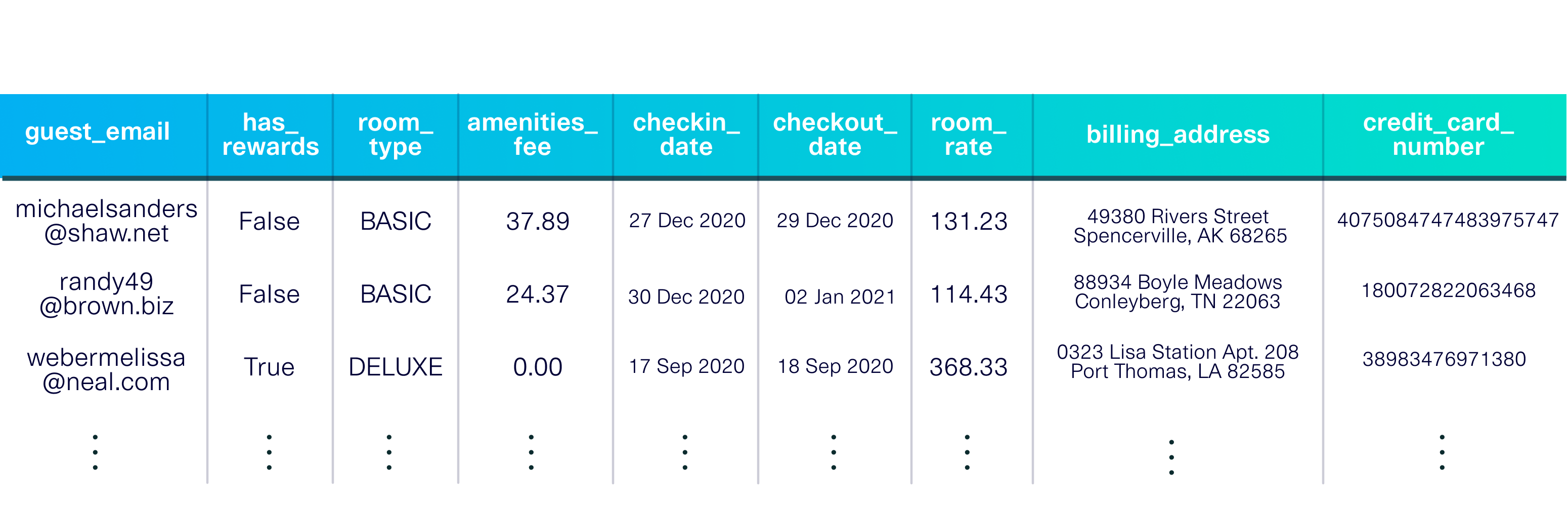
# pip install sdv   (2.2.0 on PyPI, Nov 6, 2026; Business Source License)
from sdv.datasets.demo import download_demo
from sdv.single_table import GaussianCopulaSynthesizer
from sdv.evaluation.single_table import evaluate_quality

real_data, metadata = download_demo(modality="single_table", dataset_name="fake_hotel_guests")

synthesizer = GaussianCopulaSynthesizer(metadata)
synthesizer.fit(data=real_data)
synthetic_data = synthesizer.sample(num_rows=500)

quality_report = evaluate_quality(real_data, synthetic_data, metadata)
License, read carefully. The public SDV library is under Business Source License 1.1. The Additional Use Grant lets you use it provided you do not use it for a Synthetic Data Service, defined as a commercial offering that gives third parties access to its synthesis features. Each release converts to MIT four years after release. The pricing page adds that the Community plan is for simple databases of up to 3 tables at depth 1 and allows limited commercial use. Internal testing at your own company is the clear fit; reselling synthesis is not. Email DataCebo if you are unsure.
Pricing (as of Nov 26, 2026). Community is free. SDV Enterprise Developer is $500 per user per month plus $1 per 1 million sampled data cells, with a monthly cap you set; bundles (AI Connectors, Constraint Augmented Generation, Differential Privacy, Targeted Sampling, XSynthesizers) are $250 each per user per month. Team is custom, with flat pricing and optional air-gapped install. The Developer plan needs network access to the enterprise server for usage tracking; data stays in your environment. A free trial is available on request.
Quality controls. evaluate_quality compares real and synthetic data, and DataCebo maintains SDMetrics and SDGym for evaluation and benchmarking. Constraints encode business rules. Pros. Strongest relational modelling among open tools; metrics come built in; runs where your data lives. Cons. Not for LLM text; license limits; Enterprise starts at $6,000 per user per year before bundles. Skip it if you need masking, subsetting and a UI for a QA team.
Syntho (and MOSTLY AI)
Syntho
What it is. An Amsterdam vendor selling the Syntho Engine, which combines synthetic data masking, rule-based generation with 200-plus mockers, and AI-generated synthetic data in one platform, with a sensitivity scanner, subsetting, upsampling and a quality assurance report. It can be deployed in your own environment or on-premises. On June 9, 2026 it acquired the MOSTLY AI brand.
The MOSTLY AI half. mostly.ai now says “MOSTLY AI powered by Syntho” and promotes a Data Intelligence Platform plus an open-source Synthetic Data SDK built on the TabularARGN architecture, with differential privacy and conditional sampling. The vendor page calls the SDK Apache-2.0 and local-first:
# pip install -U mostlyai   (6.2.1 on PyPI, Oct 29, 2026; Apache-2.0 per the vendor page)
from mostlyai.sdk import MostlyAI
mostly = MostlyAI()
g = mostly.train(data="/path/to/data")      # train a generator locally
g.reports(display=True)                      # inspect quality
mostly.probe(g, size=1_000_000)              # sample new rows
mostly.probe(g, seed=[{"age": 65, "gender": "male"}])   # conditional sampling
Pricing. Syntho lists Basic, Standard and Ultimate plans, all by quote. Pricing is feature-based with no consumption charges: unlimited workspaces, unlimited database usage and data generation, and support included. Database connections scale from 1 to 5 on Basic to 11 to 15 on Ultimate. We found no free tier; the site offers a demo.
Pros. No per-row charges, so large test sets do not scale your bill; combined masking plus AI generation; local SDK for experiments. Cons. Quote-only pricing; unclear support continuity for legacy MOSTLY AI customers; brand ownership versus company status is confusing. Skip it if you want to compare list prices before talking to sales.
Synthesized
Synthesized
What it is. A London test data company that has moved toward SAP and enterprise application testing. Its site leads with test data management for SAP, Tricentis Tosca and UiPath, plus AI agent environments, unstructured data (documents, emails, chats) and masking. It announced a $20 million Series A on September 24, 2025, led by Redalpine, with IQ Capital, Mercia Ventures, UBS and Seedcamp, per trade coverage.
Pricing. Packages priced by two numbers: production data in scope and the number of sources. Starter is a 12-month subscription for 500 GB of production data and one source, Growth covers 3 TB, and Enterprise and Scale are for programme-scale work; every package is contact sales. Non-production copies are unlimited with no usage or token charges. There is no free tier; the first step is a free 30-minute health check, then a fixed-fee 10-day validation on your own data. It is listed on SAP Store and the AWS and Google Cloud marketplaces.
Pros. Predictable pricing, SAP depth, runs in your environment with nothing installed in SAP. Cons. Not aimed at developers who want to pip install; customer results on the site are vendor-reported. Skip it if you have no enterprise application landscape to test.
YData (now part of KPMG)
YData
What it is. A tabular and time-series synthesis and profiling toolkit: the YData Fabric platform, the YData SDK, and open-source libraries ydata-profiling and ydata-synthetic (MIT, version 2.0.1 on April 23, 2026). KPMG announced on October 16, 2025 that it would acquire YData's IP and technology assets, with the founders joining a new Synthetic Data Center of Excellence. The YData site shows the acquisition banner.
KPMG signs definitive agreement to acquire @YData_ai tech assets, marking a major advance in their AI journey. The acquisition will establish a Synthetic Data Center of Excellence, revolutionizing synthetic data solutions and enhancing client innovation.
— @KPMG_US October 16, 2025
Pricing (as of Nov 26, 2026, from the site). The SDK page lists a free plan with a monthly credit and all features, pay-as-you-go at $1.00 per credit and Enterprise by contact. One credit buys 1 million data points or 10,000 tokens, with a 0.1 credit minimum transaction, and credits can be spent on profiling, synthetic data, question-answer pair generation and synthetic document generation. The Fabric page lists Community, Pay-as-you-go and Enterprise tiers with self-hosting on AWS and Azure. The KPMG deal covers technology assets, so check whether these plans remain open to non-KPMG buyers.
Pros. Cheap for pure tabular rows (see the cost section); MIT open-source fallback; profiling bundled. Cons. Ownership change and unclear roadmap; token pricing for document and Q&A generation is expensive next to calling a model yourself. Skip it if you want a vendor with a stated independent roadmap.
Rockfish Data
Rockfish Data
What it is. A synthetic data platform for time-series and tabular operational data, founded in June 2022 on Carnegie Mellon research. Four modules: DataFuel (generate from a sample), SchemaFuel (generate from a schema alone), Scenario Studio (inject labelled incidents, drifts and edge cases) and AgentFuel (turn those scenarios into Q&A pairs with known ground truth to score an AI agent). Case studies on its site include Conviva, Rento Peru and BIMCON.
Why it matters for LLM work. It is the only tool here that builds eval sets with a built-in answer key. Rockfish says agents scoring 73 percent on benchmark-style tasks fell to 10 to 20 percent on its domain-specific, incident-focused queries; that is the vendor's own testing. Deployment. Your VPC, on-premises or as a Snowflake Native App; SOC 2 Type II. Pricing. Free access on request; no paid price published.
Pros. Time-aware generation, labelled rare events, privacy and fidelity metrics reported together. Cons. Narrow focus on telemetry and operational data; access is by form, not self-serve. Skip it if your data is customers and orders rather than signals and events.
K2view
K2view
What it is. An enterprise data product platform with a synthetic data generation solution built around business entities (a customer with its accounts and orders) instead of columns. It combines four methods and picks per scenario: AI generation trained on masked production data, rules-based generation from business rules, entity cloning for load tests, and masking. Operations include subsetting, reservation, aging and rollback, and a data agent reads your test cases to choose and run methods. Trinity Capital provided $15 million in June 2025.
Pricing. Not published; sales only. Pros. Referential integrity across many connected systems including mainframes, and CI/CD and self-service access. Cons. Heavyweight, no free tier, no public price or SDK to try. Skip it if you have one PostgreSQL database and a small team.
Also Worth Knowing
- NeMo Safe Synthesizer (Apache-2.0, 53 stars on November 26, 2026) creates private synthetic versions of sensitive tabular datasets. It needs Linux and an A100-class or larger NVIDIA GPU, so it is a heavier install than SDV.
- Meta synthetic-data-kit (MIT, 1,657 stars, last push October 28, 2025) is a CLI with four commands: ingest, create (Q&A, chain-of-thought or summaries), curate (LLM as judge) and save-as. Good for turning documents into fine-tuning pairs; the code is quiet since late 2025.
- SAS Data Maker carries the former Hazy technology and is sold through SAS and the Microsoft Marketplace; we did not find public pricing.
- Scale AI sells human-expert data (generation, RLHF, red teaming, evaluation) through a sales process; we found no public pricing on the page we read.
How Generation Works
Four mechanisms cover nearly every tool above, and knowing which one a vendor uses predicts its strengths and its failure modes.
- Prompted LLM generation. A model writes each row from a prompt. Curator, distilabel and Data Designer do this. Quality tracks the generator model, diversity needs help from seeds, and cost scales with tokens.
- Schema or rule based generation. You define columns, ranges and relationships and the tool samples. Data Designer samplers, Syntho mockers, K2view rules and Rockfish SchemaFuel work this way. It is cheap and deterministic but only as realistic as your rules.
- Learned generative models. A statistical or neural model fits real data and samples from it. SDV, the MOSTLY AI SDK, YData, Rockfish DataFuel and Safe Synthesizer do this. Fidelity is high, but privacy risk comes from memorization, and you need source data.
- Seed data expansion. You supply real examples, documents or traces and the tool expands, rewrites or distils them. Data Designer seed sources, Curator RAFT-style examples and Meta's kit work this way. It is the most grounded route for LLM data.
Quality, Diversity and Privacy
For LLM data, build a funnel: generate more than you need, then filter. Useful gates are a validator (lint or unit test for code, schema check for JSON), an LLM judge with a rubric, a deduplication pass, and a contamination check against your eval set. Data Designer packages validators and judge columns; distilabel has MinHash; Curator and Meta's kit leave most of this to you. Keep a human-labelled sample to measure how well your judge agrees with people. Datology's cleaning stage names eval-contaminated data explicitly, which is worth copying.
For tabular data, measure three things that trade off: fidelity (do the statistics match), utility (does a model trained on it work on real data) and privacy (can anyone be re-identified). SDV ships evaluation functions, Syntho a QA report, Rockfish reports all three and Tonic issues privacy reports on Enterprise masking runs. Rockfish makes a point many vendors skip: synthetic data is not automatically anonymous, because a generator trained on sensitive data can memorize it, so privacy has to be measured on the output.
Open versus hosted. If raw data cannot leave your network, the self-hostable options are SDV, the MOSTLY AI SDK, Safe Synthesizer, Rockfish (VPC), Synthesized, K2view and Syntho. For prompt-based generation, a local vLLM model keeps both the seed data and the output in house; see our inference providers comparison for hosted generator options and the GPU cloud roundup if you need to rent hardware for a large run.
Cost Examples With Arithmetic
All rates are from the vendor pages dated November 26, 2026, except the last row, whose model prices are an assumption for illustration. Substitute your own provider rates.
| Scenario | Arithmetic | Result | Note |
|---|---|---|---|
| Tonic Fabricate Free | $10 credits / $0.17 per standard turn | about 58 standard turns | or about 27 complex turns ($10 / $0.37) |
| Tonic Fabricate Plus | $29 per month, $25 credits / $0.17 | about 147 standard turns | or about 67 complex turns ($25 / $0.37); extra usage is metered |
| SDV Enterprise Developer, 1 user, 50M cells | $500 + ($1 x 50) | $550 per month | Add one $250 bundle: $800 per month |
| SDV Enterprise cap example from the pricing page | $500 + $100 cap | $600 per user per month | The cap covers up to 100M sampled cells |
| SDV: one table, 100,000 rows x 30 columns | 3,000,000 cells x $1 per 1M | $3.00 of usage | Subscription not included |
| YData SDK: 500,000 rows x 12 columns | 6,000,000 data points = 6 credits x $1 | $6.00 | Pay-as-you-go rate |
| YData SDK: 20M tokens of Q&A pairs | 20,000,000 / 10,000 = 2,000 credits x $1 | $2,000 | About $100 per 1M tokens on the credit rate |
| LLM-driven tools (illustration) | 50,000 examples x (300 input + 700 output tokens) = 15M in + 35M out | $77.50 at assumed $0.50 / $2.00 per 1M | About $38.75 if the provider batch discount is 50% |
Two things stand out. Tabular synthesis is cheap per row at SDV and YData rates, so seat and subscription costs dominate. And YData's token rate for generated Q&A pairs works out to $100 per million tokens, far above what most model providers charge for output tokens, so for LLM data a library plus your own model key is almost always cheaper.
Export Formats
For fine-tuning you want rows the trainer can read: JSONL with a messages list, Parquet, or a Hugging Face Dataset. Data Designer writes batched Parquet and has a processor to shape OpenAI-style messages, plus push_to_hub. distilabel pushes a Distiset to the Hub. Curator returns a Hugging Face Dataset. Meta's kit has a save-as step for fine-tuning formats. Tabular tools return DataFrames or database loads: SDV gives pandas, Tonic lists CSV, JSON, Parquet, Avro, Iceberg, Delta Lake, XML and SQL targets. We did not find explicit JSONL export claims on the vendor pages we read, so verify before you promise a downstream team a format.
Feature Matrix
“Not documented” means the pages we read did not say, not that the feature is absent.
| Tool | LLM text data | Tabular / relational | Open source | Self-host | Free tier or software | Export |
|---|---|---|---|---|---|---|
| Tonic.ai | Partial | Yes | Partial | Enterprise | Yes (Fabricate Free) | Parquet, JSON, CSV, Avro; no Hugging Face push documented |
| NeMo Data Designer | Yes | Partial | Yes | Yes | Yes | Parquet, push_to_hub |
| Bespoke Curator | Yes | Partial | Yes | Yes | Yes | Hugging Face Dataset, pandas |
| DataCebo SDV | No | Yes | Source-available | Yes | Community tier | pandas DataFrames |
| distilabel | Yes | No | Yes | Yes | Yes | Hugging Face push_to_hub, Argilla |
| Synthesized | Partial | Yes | No | Yes | Health check only | Not documented on pages read |
| Syntho | Partial | Yes | No | Yes | No | Not documented on pages read |
| YData | Partial | Yes | ydata-synthetic only | Yes | Free credit | Not documented on pages read |
| Rockfish Data | Partial | Yes | No | Yes | By request | Models on Hugging Face; data export not documented |
| K2view | No | Yes | No | Yes | No | Not documented on pages read |
| DatologyAI | Yes (corpora) | No | No | Yes | No | Not documented |
| Snorkel AI | Partial | No | No | Not stated | No | Not documented |
How to Choose
| If you... | Pick | Notes |
|---|---|---|
| You need 10k to 1M instruction or Q&A rows for a LoRA | NeMo Data Designer or Curator | Both are Apache-2.0 and you control the generator model. Data Designer has more built-in quality gates; Curator is smaller. |
| You need preference pairs (chosen and rejected) | distilabel, or Data Designer with an LLM-judge column | Check the maintenance state of distilabel before you depend on it. |
| You need tool-use or agent trajectories | NeMo Data Designer | MCP tool use with captured traces, plus ingestion of existing agent rollouts as seeds. |
| You need a testing database that looks like production | SDV, Synthesized, K2view or Syntho | Pick on schema depth, deployment model and who signs the contract. |
| You have no production data yet | Tonic Fabricate, Rockfish SchemaFuel or SDV Enterprise | All three can start from a schema or a description. |
| You must keep raw PII away from an LLM provider | Tonic Textual, or run Data Designer or Curator against a local vLLM model | Redact first, or keep generation on your own GPUs. |
| You are pre-training or mid-training a base model | DatologyAI | Curation at corpus scale, not row-by-row generation. |
| You want one vendor for everything in a regulated bank | Synthesized, K2view or Tonic Enterprise | Expect sales cycles and security reviews. |
A sensible LLM-data workflow has five steps. Write 20 to 50 real gold examples by hand. Expand them with a seed-driven pipeline in Data Designer or Curator. Filter with validators, a judge and deduplication. Fine-tune a small model and test it on a real held-out set. Feed failures back as new seeds. For monitoring the result in production, see our LLM observability and eval tools comparison. If your seeds are PDFs, read the OCR and document parsing APIs roundup first, and for running small open models locally see the local models with Ollama setup guide.
Common Mistakes and Checklist
- Trusting an old roundup. Gretel, MOSTLY AI, Hazy and YData all changed hands; re-verify any vendor older than 2025.
- Skipping a real eval set. Synthetic training data scored by a synthetic judge hides errors. Keep real held-out data.
- Using temperature as diversity. Seed with personas, topics, difficulty and documents instead.
- Ignoring generator terms. Check the model provider and open-weight license for limits on training with outputs.
- Assuming synthetic means anonymous. Measure memorization and re-identification on the output.
- Ignoring licenses. SDV is Business Source License; do not wrap it in a service you sell to customers without asking.
- Forecasting by seat, not usage. SDV charges per user plus cells; Tonic charges credits per turn; YData charges per credit.
- Sending raw PII to a hosted model. Redact first (Tonic Textual) or generate on local models.
Buying checklist: What is the data type and volume? Do you have source data? Must it stay in your VPC? What license applies? Which export formats do you need? Who owns the vendor today? What does the pilot cost, and is it free?
How We Evaluated
We read each vendor's pricing, product and docs pages, GitHub repositories, package indexes and press releases on November 26, 2026, and used first-party sources for every price, license and limit. GitHub stars and package versions were read from the GitHub API and PyPI the same day. We did not run these tools ourselves for this guide and we publish no benchmark of speed or data quality, because no neutral public benchmark compares them; code snippets are adapted from each project's own README or docs. Acquisition details come from company releases where we could fetch them (Syntho, KPMG, SDV 2.0) and from press elsewhere, labelled as such. We dropped a research claim about monthly search demand because we could not fetch its source. There are no affiliate links in this ranking, and prices change often, so confirm on the vendor page.
FAQ
What is the best synthetic data generation tool in 2026?
It depends on the job. For LLM fine-tuning data, NVIDIA NeMo Data Designer and Bespoke Curator are the strongest open-source options we found, with distilabel as a preference-data specialist that has a maintenance caveat. For privacy-safe tabular or test data, DataCebo SDV is the standard open library, and Tonic.ai, Synthesized, K2view and Syntho are the commercial platforms.
What happened to Gretel?
NVIDIA acquired Gretel in March 2025 according to TechCrunch and Wired coverage, and the standalone Gretel service was folded into NVIDIA. As of Nov 26, 2026 gretel.ai redirects to an NVIDIA synthetic data page, and the gretel-synthetics repository is archived on GitHub. NVIDIA now offers NeMo Data Designer and NeMo Safe Synthesizer as Apache-2.0 repositories. NVIDIA does not state on the pages we read how much Gretel code is inside them.
Is MOSTLY AI still available?
The brand is. Syntho announced on June 9, 2026 that it acquired the MOSTLY AI brand, trademark and related assets, and the site now says MOSTLY AI powered by Syntho. The open-source Synthetic Data SDK (package mostlyai) still shipped version 6.2.1 on Oct 29, 2026. Secondary coverage citing CB Insights says the original company had wound down earlier in 2026; we could not confirm that on a primary source, so confirm support terms before you buy.
Is Hazy still around?
Hazy is no longer a standalone product. SAS bought Hazy's main software assets in November 2024 and folded the technology into SAS Data Maker, which later launched on the Microsoft Marketplace.
Was YData acquired?
Yes. KPMG announced a definitive agreement on Oct 16, 2025 to acquire YData's intellectual property and technology assets, including the platform and SDK, to form a Synthetic Data Center of Excellence. The ydata.ai site carries a banner saying YData has been acquired by KPMG, and the open-source ydata-synthetic package (MIT) released 2.0.1 in April 2026.
Can I use synthetic data to fine-tune an LLM legally and safely?
Generating training data from a model is governed by that model provider's terms, so read them. Several providers restrict using outputs to train competing models, and open-weight licenses differ. Separately, privacy law treats synthetic data as safe only if it cannot be traced back to real people, so measure memorization and re-identification instead of assuming. This is general information, not legal advice.
How do I keep synthetic LLM data diverse?
Do not rely on temperature alone. Use structured seeds and samplers (Data Designer explicitly configures statistical samplers to steer diversity), vary personas and task types, seed from real documents, and deduplicate. distilabel offers a MinHash deduplication extra, and Data Designer's retrieval plugin documents embedding-based deduplication. Curator and others leave dedup to you.
Open source or hosted?
For LLM data, open source wins on cost and control because the real cost is generator model tokens, which you pay either way. For regulated tabular and test data, hosted or enterprise deployments buy you connectors, masking, audit reports and support. SDV sits in between: free for small schemas, paid for scale.
Which tools have a free tier?
Free libraries: NeMo Data Designer, Curator, distilabel, the MOSTLY AI SDK and ydata-synthetic. Free plans: Tonic Fabricate (Free with $10 monthly credits), SDV Community (up to 3 tables at depth 1 per the pricing page), YData SDK (a free monthly credit) and Rockfish (free access by request). Prices as of Nov 26, 2026.
Which formats do these tools export?
Data Designer writes batched Parquet and can push to the Hugging Face Hub; distilabel pushes a Distiset to the Hub; Curator returns a Hugging Face Dataset or pandas frame; SDV returns pandas DataFrames; Tonic Fabricate lists CSV, JSON, Parquet, Avro, Iceberg, Delta Lake, XML and database targets. We did not find explicit JSONL export on the vendor pages we read, though converting from Parquet or a Dataset is one line.
Is synthetic data enough on its own for fine-tuning?
Usually not. Mix it with real examples, hold out a real evaluation set, and judge the result on tasks the synthetic data did not generate. Models trained only on model-generated text can drift toward the generator's style and errors, so filter aggressively and keep human review in the loop for the hardest slices.
Does the synthetic data market have a lot of search demand?
We could not fetch a primary source for monthly search volume and do not quote one. What we can show is activity: NeMo Data Designer, SDV and distilabel repositories have thousands of GitHub stars each, and vendors raised or sold in 2025 and 2026 as described above.
Sources
All fetched on November 26, 2026 unless noted.
- Tonic.ai pricing (Fabricate, Structural, Textual)
- Tonic Fabricate product page
- Tonic Fabricate walkthrough video
- Tonic Fabricate Data Agent launch (press release)
- Tonic $35M Series B post
- NeMo Data Designer repository
- NeMo Data Designer docs index
- NeMo Data Designer technical report (arXiv 2609.17699)
- Data Designer: push datasets to Hugging Face Hub
- Data Designer: validators
- Data Designer: deployment options
- NeMo Safe Synthesizer repository
- gretel.ai (redirects to NVIDIA)
- TechCrunch: Nvidia reportedly acquires Gretel (Mar 19, 2025)
- gretel-synthetics repository (archived)
- Bespoke Curator repository
- Curator on PyPI
- Curator docs
- Bespoke Labs homepage
- SiliconANGLE: Bespoke Labs raises $40M (Jul 6, 2026)
- Mahesh Sathiamoorthy talk: Data and Environment Curation for Post-Training LLMs (AI Engineer)
- distilabel repository and README
- distilabel on PyPI
- DatologyAI
- SiliconANGLE: DatologyAI raises $46M (May 2024)
- Snorkel AI
- Scale AI Data Engine
- DataCebo SDV pricing
- SDV repository and LICENSE (BSL 1.1)
- SDV on PyPI
- DataCebo SDV 2.0 press release (Sep 15, 2026)
- Syntho acquires MOSTLY AI brand (Jun 9, 2026)
- Syntho pricing
- MOSTLY AI powered by Syntho (SDK page)
- mostlyai on PyPI
- Synthesized homepage
- Synthesized pricing
- Synthesized $20M Series A coverage (FinSMEs)
- YData homepage (KPMG banner)
- YData SDK pricing
- YData Fabric pricing
- KPMG: agreement to acquire YData IP and technology assets (Oct 16, 2025)
- ydata-synthetic on PyPI
- Rockfish Data
- Rockfish FAQ
- K2view synthetic data generation tools
- Trinity Capital provides K2view $15M (PR Newswire, Jun 2025)
- SiliconANGLE: SAS buys Hazy software (Nov 12, 2024)
- TechCrunch coverage: Handshake buys Cleanlab (Jan 2026, via aetos.ai mirror)
- Meta synthetic-data-kit repository